Morocco is one of the most geographically diverse countries in North Africa, and that variety translates into an extraordinary range of outdoor activities. Within a few hours' drive you can move from the snow-dusted peaks of the High Atlas to the rolling waves of the Atlantic coast, or from verdant cedar forests to the vast silence of the Sahara dunes. The country currently lists 71 locations across four activity types — 21 hiking routes, 20 camping destinations, 21 surf breaks, and 9 viewpoints — making it a genuine playground for anyone who loves the outdoors. This guide breaks down each activity, highlights the standout locations, explains when to go, and helps you plan a trip that weaves together Morocco's best outdoor experiences.
Hiking in Morocco
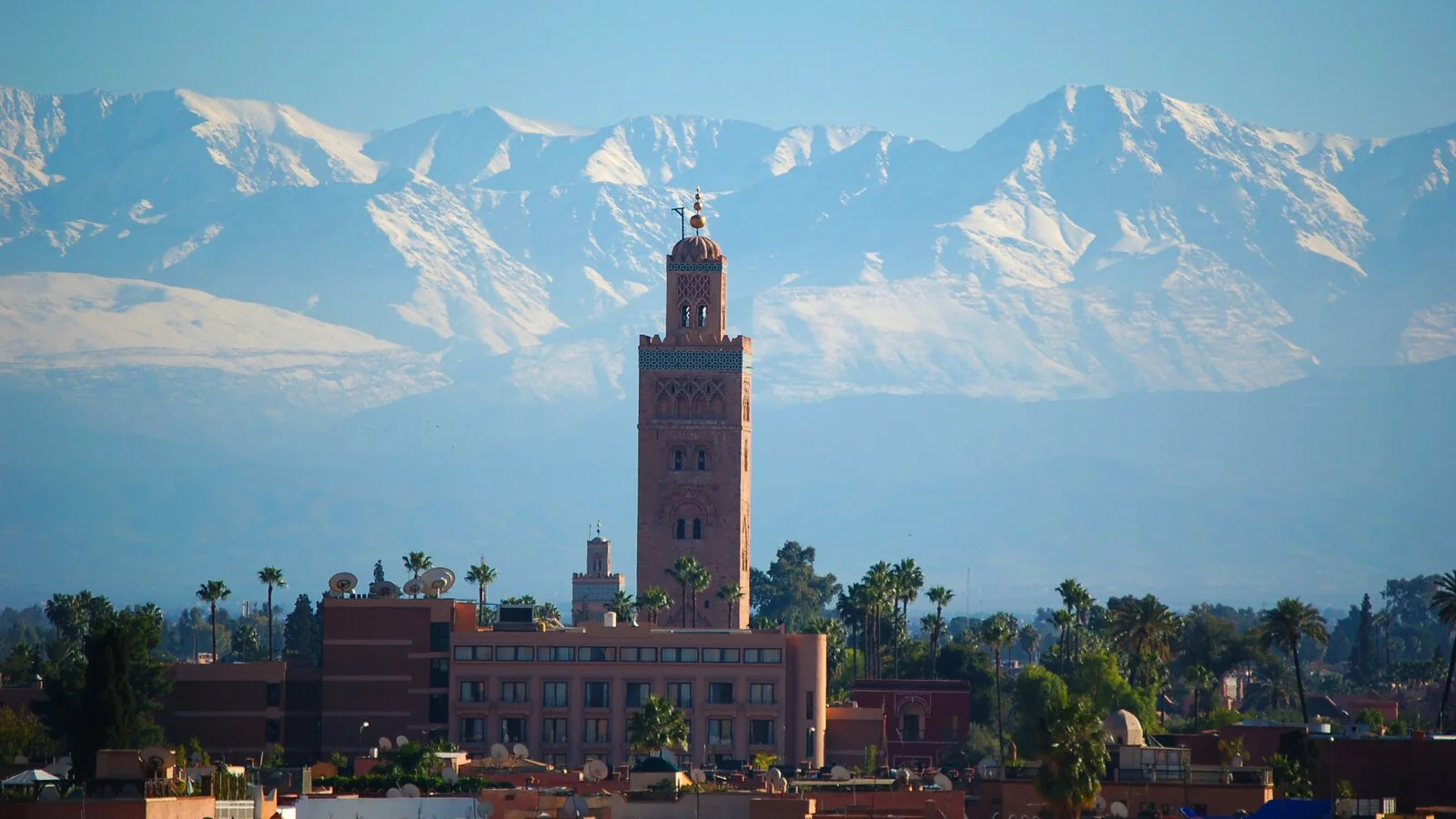
Morocco's hiking scene is anchored by the High Atlas Mountains, a 750‑km range that runs diagonally across the country. The undisputed flagship is Jebel Toubkal, North Africa's highest peak at 4,167 m. The standard two‑day summit route from Imlil via the Toubkal Refuge is the most popular high‑altitude trek in the region, offering a demanding but non‑technical ascent in summer and a snow/ice climb in winter. Toubkal is just one of 21 hiking locations across the country. The Toubkal Circuit loops around the massif over 5–6 days, passing remote villages like Tacheddirt and Amsouzert, alpine lakes such as Ifni Lake, and high passes exceeding 3,500 m. Other notable hikes include the M'Goun Massif east of Toubkal, which offers wild canyons and high plateaus, the Valley of the Roses with its fragrant terraces and kasbahs, and the Ourika Valley foothills near Setti Fatma — a gentler option with waterfalls and Berber villages.
Seasonal guidance: The best hiking season is April through October. Spring (April–June) brings wildflowers and snowmelt; autumn (September–October) offers clear skies and comfortable temperatures. Winter (November–March) transforms the High Atlas into an alpine environment — crampons and ice axes become necessary above 3,000 m, and a certified guide is mandatory by law on Toubkal routes year‑round. Summer (July–August) is viable at altitude but lower valleys can be very hot.
Explore all 21 hiking locations →
Camping in Morocco
Camping in Morocco spans three dramatically different environments: the desert, the mountains, and the coast. The most iconic camping experience is in the Sahara Desert, where dunes like Erg Chebbi near Merzouga and Erg Chigaga near M'Hamid offer overnight stays in traditional Berber camps. These deserts host 20 camping locations in total. Desert camping is most comfortable from October through April, when daytime temperatures are warm but not scorching and nights are cool. Summer camping in the Sahara (June–September) is possible but demanding, with daytime highs exceeding 45 °C.
In the Atlas Mountains, camping takes on an alpine character. Multi‑day treks like the Toubkal Circuit include nights in tents beside lakes (Ifni Lake) or in high valleys (Azib Likemt). Mountain camping is best from April to October, with crisp nights requiring a 2–3 season sleeping bag. Along the Atlantic coast, beach camping near Taghazout, Imsouane, and Sidi Kaouki offers a more temperate alternative, though wild camping regulations have tightened in recent years — many popular overnight spots now require using official campsites.
Seasonal guidance: Desert camping peaks in spring and autumn when temperatures are mild. Mountain camping is ideal from late spring through early autumn. Coastal camping works year‑round but expect stronger winds in winter.
Explore all 20 camping locations →
Surfing in Morocco
Morocco's Atlantic coastline has become one of the world's top surf destinations, with 21 surf breaks concentrated between Agadir and Essaouira. The epicentre is Taghazout, a former fishing village that now hosts dozens of surf camps, schools, and board rentals. The area offers a mix of forgiving beach breaks — Crocodile Beach, Banana Point, Panoramas — and more challenging point breaks like Anchor Point and Hash Point. Just north of Taghazout, Tamraght and Aourir provide additional beginner‑friendly spots, most notably Devil's Rock and Km 17.
Further north, Imsouane is home to The Bay, Africa's longest rideable wave, peeling for up to 600 m on a good day — a must‑ride for intermediate surfers and a dream wave for longboarders. Essaouira and Sidi Kaouki offer wind‑affected breaks popular with kitesurfers and windsurfers as well as surfers. The variety of sand‑bottom beach breaks, point breaks, and reef breaks means Morocco serves beginners through professionals across a compact stretch of coast.
Seasonal guidance: Surf is consistent year‑round. April–October delivers smaller swells (0.3–1.5 m) ideal for beginners, with water temperatures of 18–22 °C. November–March brings larger swells (1.5–3.5 m) for experienced surfers, cooler water (16–19 °C), and more powerful waves. Autumn and spring offer the best balance of size and conditions for intermediate surfers.
Viewpoints in Morocco
Morocco's 9 viewpoints offer some of the most photogenic panoramas in North Africa, spanning mountains, coastlines, medinas, and desert edges. The most celebrated is the view from Chefchaouen, the famous blue city nestled in the Rif Mountains. Multiple vantage points around the old medina and the hillside above town look down over the cascading blue‑washed buildings against a backdrop of rugged green peaks — especially striking at golden hour.
In the High Atlas, the summit of Jebel Toubkal is itself a viewpoint, offering a 360° panorama that on clear days extends from the Sahara to the Atlantic. The passes along the Toubkal Circuit — Tizi n'Likemt (3,550 m) and Tizi n'Ouanoums (3,670 m) — provide equally dramatic outlooks over valleys and alpine lakes. Along the Atlantic coast, the cliffs above Taghazout, the lighthouse headland at Essaouira, and the dunes of Erg Chebbi at sunrise each offer their own distinct perspectives on Morocco's landscapes. In the south, the Kasbah of Aït‑Ben‑Haddou and the Dadès Gorge viewpoints capture the desert architecture and eroded rock formations that have featured in countless films.
Seasonal guidance: Viewpoints are accessible year‑round, but the best visibility typically occurs in spring and autumn when the air is clear. Winter can bring snow to high‑altitude viewpoints (Toubkal, Tizi passes). Summer mornings offer the clearest light before afternoon haze builds.
Where to Start
With so many activities spread across a large and geographically diverse country, choosing a base matters. Here are the three gateway cities that give you the quickest access to Morocco's best outdoor experiences:
Marrakech is the primary hub for hiking and mountain‑based activities. The trailhead village of Imlil is just 65 km (90 minutes) south of the city, making it the natural starting point for Toubkal ascents, the Toubkal Circuit, and day hikes in the Ourika Valley. Marrakech also works as a springboard for camping trips into the Atlas and, with a longer drive, for desert excursions to Merzouga (about 6 hours).
Taghazout / Agadir is the gateway for surfing and coastal activities. Agadir's international airport receives direct flights from major European cities, and Taghazout is a 45‑minute drive away. From here you can reach all 21 surf breaks along the central coast, plus beach camping spots and coastal viewpoints. The area also has direct access to Paradise Valley for hiking and swimming in natural pools.
Merzouga is the desert gateway for Sahara camping and desert viewpoints. This small village at the edge of Erg Chebbi — Morocco's most accessible dune field — is where most multi‑day desert trips begin. Camel treks, 4×4 tours, and overnight camp stays are organised from here. Merzouga is also the best place to photograph sunrise and sunset over the dunes.
How to Combine Activities
The beauty of Morocco's outdoor scene is that you can realistically combine two or even three activities in a single trip. A 10‑day itinerary might begin with hiking in the Atlas Mountains (3–4 days from Marrakech), continue south to the desert for Sahara camping (2–3 days via Merzouga), and finish on the Atlantic coast for surfing (3–4 days in Taghazout). The N10 road between Marrakech and the desert passes through dramatic gorges and kasbahs, making the travel between activities an experience in itself. Alternatively, a shorter 7‑day trip could focus on just two activities — for example, combine surfing on the coast with a multi‑day camp in the desert, or split time between mountain hiking and coastal viewpoints.
What to Pack for a Multi‑Activity Trip
Because Morocco spans such varied environments, packing for multiple activities requires careful planning. A layered clothing system works best: base layers, insulating mid‑layers, and a waterproof shell cover you from desert to summit. Sturdy hiking boots are essential for the Atlas treks, while sandals or trainers suffice for surf towns and desert camps. For surfing, pack a 3/2 mm wetsuit (year‑round except summer, when a shorty works), reef‑safe sunscreen, and a rash‑vest. For camping, a 2–3 season sleeping bag, headlamp, and water purification tablets cover both mountain and desert nights. Polarised sunglasses and a wide‑brim hat are non‑negotiable in both the desert and at altitude. A power bank with at least 10,000 mAh is recommended, as electricity can be intermittent in refuges and remote camps.
Practical Tips for Travellers
Transport: Renting a car gives you the most flexibility to move between activities. The road network is good — major highways (A1, A7) connect Marrakech, Agadir, and Casablanca, while the N9 and N10 take you into the mountains and desert. Shared grand taxis and CTM buses are budget‑friendly alternatives for individual legs.
Guides and permits: A certified guide is legally required for Toubkal routes year‑round. For desert camping, most organised trips include a guide and driver. For surfing, hiring an instructor for your first sessions is strongly recommended.
Best time for a multi‑activity trip: October and April are the sweet spots — both offer pleasant temperatures across all environments, manageable crowds, and good conditions for each activity. November–March favours surfing over mountain hiking (winter gear is needed above 3,000 m), while July–August is best for Atlas treks but challenging for desert camping due to extreme heat.
Respect local culture: Morocco is a Muslim country. Dress modestly in villages, souks, and rural areas — covering shoulders and knees. Always ask permission before photographing people. Learn a few phrases in Darija (Moroccan Arabic) — "salamu alaykum" (hello) and "shukran" (thank you) go a long way.
Related Guides & Pages
Strengthen your planning by exploring these resources on Outdoors Atlas:
- Atlas Mountains Trekking Guide — In‑depth planning for Toubkal ascents and multi‑day treks.
- Camping Essentials for Morocco — Gear lists, regulations, and safety tips for desert and mountain camping.
- Beginner's Guide to Surfing Morocco — Seasonal conditions, surf camps, and spot guides for the Atlantic coast.
- Morocco Destination Overview — Regions, culture, and travel logistics at a glance.
- Activities: Hiking — All hiking routes across Morocco, Spain, and Portugal.
- Activities: Camping — Camping destinations and tips across all three countries.
- Activities: Surfing — Surf breaks, camps, and seasonal guides.
Conclusion
With 71 locations across hiking, camping, surfing, and viewpoints, Morocco offers one of the most concentrated and accessible outdoor adventure scenes in the Mediterranean and North African region. The diversity is remarkable: you can summit a 4,167 m peak, surf Atlantic swells, sleep beneath Saharan stars, and photograph one of the world's most photogenic blue cities — all within a week's itinerary. Each activity has its own rhythm and season, but the country's compact geography and improving infrastructure make it feasible to combine them in a single trip. Whether you're a dedicated hiker, a surf traveller, or someone who simply wants to experience the full breadth of Morocco's natural beauty, the trailheads, waves, dunes, and viewpoints are waiting.