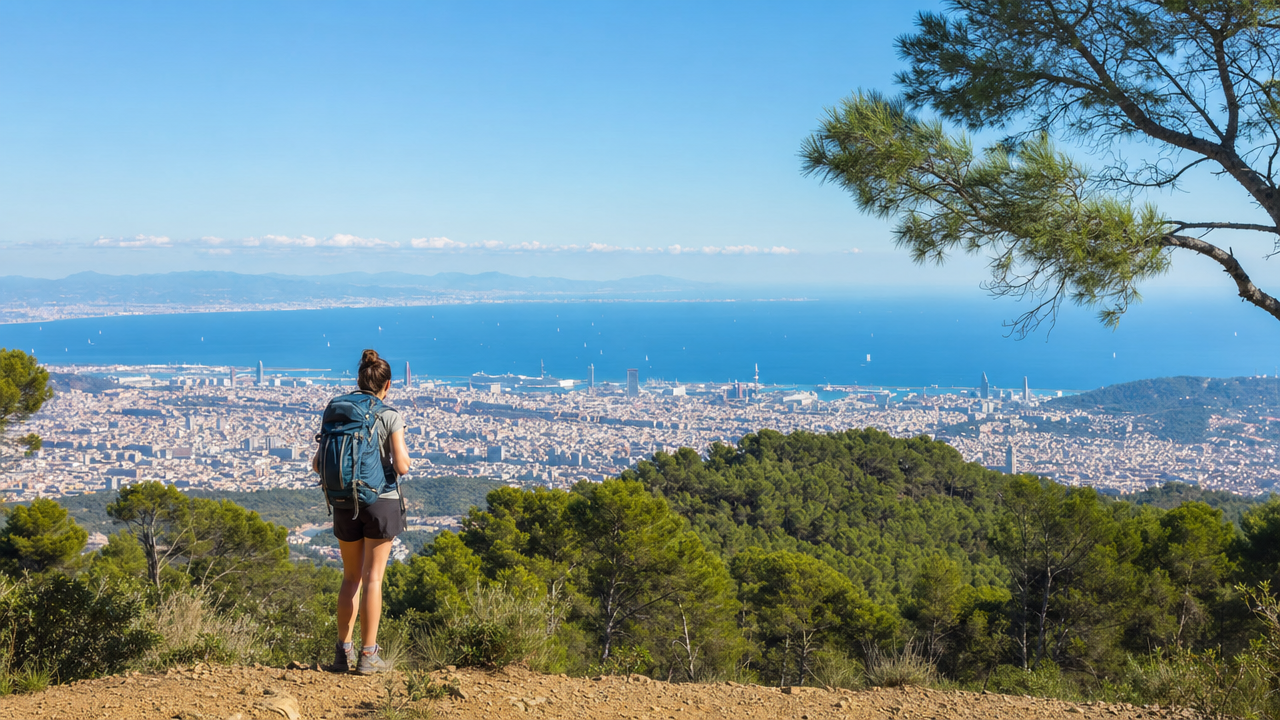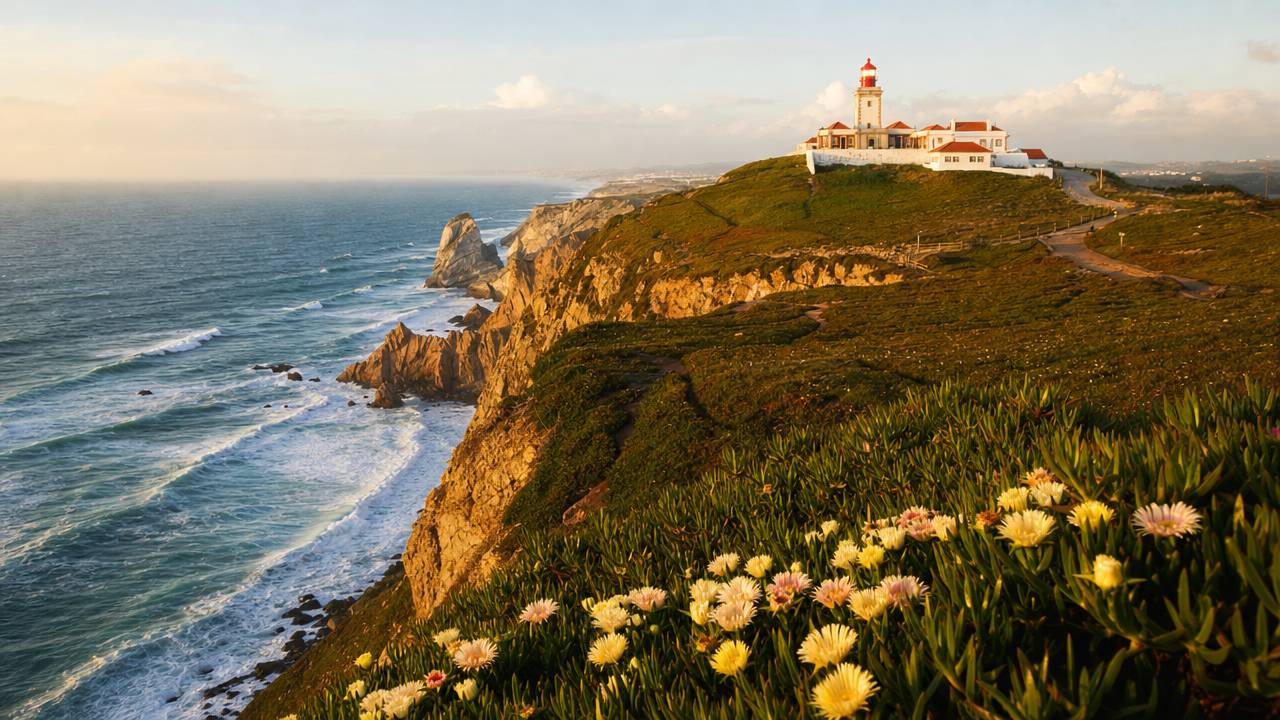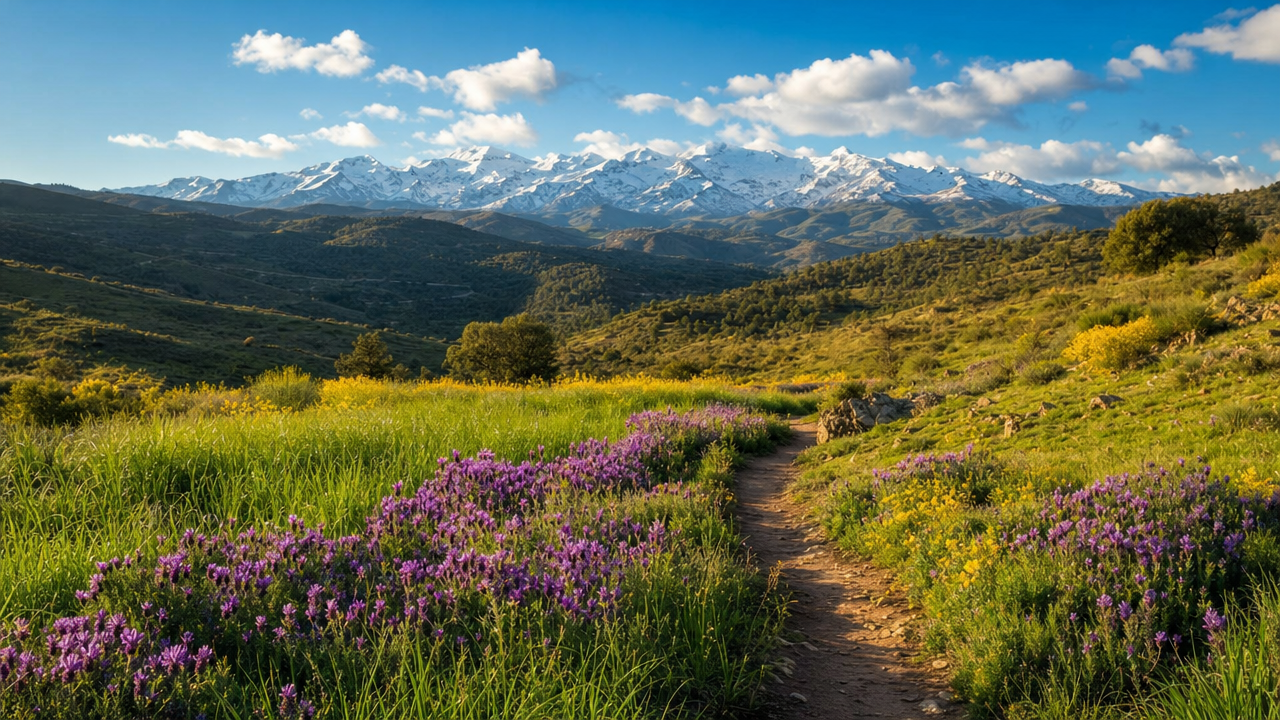
Spain in spring is unmatched. While the rest of Europe shakes off a lingering winter, the Iberian Peninsula bursts into green, wildflower-carpeted life. The crowds of summer haven't arrived, the midday heat hasn't set in, and the mountains still carry snow on their highest flanks — just enough to frame a photograph.
I've hiked Spain year-round: the sweltering August ascents where you carry three litres and still run dry, the muddy November slogs in the Pyrenees that test your waterproofing more than your legs. Spring is different. From late March through May, the conditions across most of Spain are near-perfect: cool mornings, warm afternoons, and trails that range from snow-dusted high passes to bloom-covered coastal paths.
This guide covers five of the best spring hiking destinations in Spain, with specific trail recommendations, difficulty ratings, and the exact timing to hit each one at its peak.
Why Is Spring the Best Season for Hiking in Spain?
The case for spring hiking in Spain boils down to three things: temperature, wildflowers, and solitude.
Temperature. Most of Spain's best hiking terrain sits between 500 and 2,500 metres elevation. In March, the lowlands are already warming up — expect 12–18°C in Andalusia — while the mountains stay cool enough for comfortable walking. By May, coastal routes in the north sit at a perfect 18–22°C. Compare that to July, when a Sierra Nevada trail at 1,500 m can hit 35°C by midday and you'll be retreating to shade by eleven.
Wildflowers. Spain's spring bloom is extraordinary. The Sierra Nevada alone hosts over 2,100 plant species, dozens of them endemic. From March's first almond blossoms in Andalusia to May's explosion of poppies, irises, and rock roses across the central meseta, the colour shift week to week is dramatic. There's a wildflower calendar at the end of this guide.
Solitude. Summer on the GR-11 or the Caminito del Rey means queues. Spring means sharing the trail with a handful of other hikers — or nobody at all, especially midweek. If you're flexible with dates, March and early April are the quietest months on the long-distance routes.
If you're still deciding on timing, our guide to the best time to visit Spain covers the full seasonal breakdown, but for hikers, spring wins every time.
1. Andalusia: Sierra Nevada (March–April)
The Sierra Nevada is Europe's southernmost ski resort, but by March the lower slopes are already trading snow for wildflowers. The key here is elevation: above 2,500 m you'll still find snow patches well into April, while the valleys below 1,800 m are hiking-ready from mid-March.
Best Trail: Mulhacén via the Hoya de la Mora
- Distance: 16 km round trip
- Elevation gain: 1,200 m
- Difficulty: Hard
- Season: Late March – late April (with microspikes recommended before mid-April)
- Start point: Hoya de la Mora car park (2,500 m)
Mulhacén (3,479 m) is mainland Spain's highest peak. The standard route from Hoya de la Mora follows a clear path past the Lagunillas refuge and up the western ridge. In early spring expect firm snow above 3,000 m from mid-morning — an ice axe isn't necessary but poles with snow baskets are useful. The summit view on a clear April morning, with the Sierra Nevada range stretching north and the Mediterranean glinting to the south, is one of the finest in Europe.
Alternative for moderate hikers: The Río Monachil Trail from the village of Monachil to the Hoya de la Mora — 12 km, 600 m gain, moderate. It follows an old mule track through cork oaks and wild cherry trees, with the first irises appearing from early April.
From the trailhead, it's a short drive into Granada. Don't skip the Mirador de San Nicolás viewpoint in Granada — the Alhambra backdropped by snow-capped Sierra Nevada is a spring sight that belongs on every hiker's bucket list.
The best Andalusia hiking trails guide has full route specifics for this region and a dozen more spring-ready walks.
2. Andalusia: Caminito del Rey (April–May)
The Caminito del Rey is Andalusia's most famous via ferrata — a walkway pinned to the limestone walls of the Gaitanes Gorge, 100 metres above the river. After a complete restoration, it's safe, well-maintained, and spectacular.
The Trail
- Distance: 7.7 km (3 km of walkway, plus approach paths)
- Elevation gain: Minimal — the route is mostly flat
- Difficulty: Easy–Moderate (narrow sections, some vertigo exposure)
- Season: April–May (opens year-round, but spring temperatures are ideal)
- Start point: Ardales (north entrance) or El Chorro (south entrance)
The Caminito del Rey in Andalusia, southern Spain, is a 7.7-kilometre via ferrata pinned to the limestone walls of the Gaitanes Gorge, suspended 100 metres above the river below. Despite its height, the walkway has minimal elevation gain and is rated easy to moderate, taking 3 to 4 hours including photo stops and a bus transfer. Spring — April through May — is the optimal season because the river runs full from snowmelt and temperatures hover at 18 to 22°C, compared to June when exposed sections become uncomfortably hot. The route caps daily visitors at 1,100 tickets; spring weekends sell out weeks in advance, while weekday April tickets are usually available a few days out with advance booking still recommended. The trail runs one-way from Ardales to El Chorro, with gorge walls draped in maidenhair ferns and wild olive throughout spring.
What to know: The boardwalk is a single-file route with no alternative path — if you're uncomfortable with heights, the section above the suspended bridge at the gorge's narrowest point (the famous "death bridge" photo spot) requires a steady head. That said, the handrails and walkway surface are modern and solid.
3. Picos de Europa: Coastal Routes (May)
The Picos de Europa in northern Spain are a limestone massif rising abruptly from the Cantabrian coast. Unlike the Sierra Nevada, the high peaks here hold snow well into June. But the lower slopes and the routes that trace the northern edge of the range are prime spring hiking territory from early May.
Best Trail: Ruta del Cares
- Distance: 24 km round trip (12 km one way if using transport)
- Elevation gain: 400 m (negligible for a trail of this length)
- Difficulty: Moderate (long, but mostly flat)
- Season: Late April – May
- Start point: Caín (León side) or Poncebos (Asturias side)
The Ruta del Cares is Spain's most celebrated day hike, a gorge trail cut into the vertical limestone between Caín and Poncebos. In May the Cares River runs high with snowmelt, the gorge walls are lush with moss and saxifrage, and the crowds of peak summer are still weeks away.
Walk it point-to-point from Caín to Poncebos (12 km, 3.5–4 hours). The path is cut into the cliff face for most of the distance — a narrow track with sheer drops to the river below. The section called "the balcony" at roughly the halfway mark is the most dramatic, where the gorge narrows to barely 20 metres wide and the walls rise 400 metres on both sides.
Combination option: Pair the Ruta del Cares with a visit to the Covadonga Lakes — the lake circuit (5 km, easy, suitable for late May) gives you a different face of the Picos: high pastures, limestone pavements, and the iconic lakeside basilica.
The full Picos de Europa coastal route guide has GPX downloads, accommodation recommendations in Caín and Arenas de Cabrales, and the best post-hike sidrería stops.
4. Madrid: La Pedriza (March–May)
La Pedriza is a granite wonderland in the foothills of the Sierra de Guadarrama, barely an hour north of Madrid. It's the largest granite outcrop in Europe — a chaos of weathered boulders, hidden streams, and Mediterranean oak forest.
Best Trail: Sendero de la Dehesilla to the Mirador de la Pedriza
- Distance: 10 km round trip
- Elevation gain: 450 m
- Difficulty: Moderate
- Season: March–May (lower sections accessible from February)
- Start point: Canto Cochino car park
The trail follows the Manzanares River upstream through holm oak and rockrose, then climbs through a series of granite towers to a viewpoint overlooking the entire Pedriza massif. The route is well-marked (follow PR-M 1 markers, then Senda de la Dehesilla arrows once you pass the bridge).
March brings the first rock roses and wild lavender to the lower slopes. By April the valleys are fully green, and in May the higher sections are carpeted in broom flowers — the yellow blossoms stand out brilliantly against the grey granite.
Family-friendly option: The Charca Verde loop — 4 km, 100 m gain, easy — a gentle circuit around a natural swimming hole that's filled by snowmelt in April. It's one of the most pleasant short walks in central Spain for early spring.
Logistics: La Pedriza has a daily vehicle access cap in peak season, but in March and April the car parks at Canto Cochino rarely fill before 10 am. The bus from Madrid's Moncloa station to Manzanares el Real runs hourly, and it's a 20-minute walk from the village to the trailhead.
5. Pyrenees: Valley Trails (May)
The high Pyrenees — anything above 2,000 m — stays snowbound through April and into early May. But the valley trails on the Spanish side open up from mid-May, offering outstanding walking before the summer crowds hit the GR-11.
Best Trail: Valle de Ordesa — Circo de Soaso
- Distance: 14 km round trip
- Elevation gain: 500 m
- Difficulty: Moderate
- Season: Mid-May – June
- Start point: Ordesa car park (Aínsa-Sobrarbe district)
This is the classic walk in the Ordesa y Monte Perdido National Park. From the car park at the valley floor, the trail follows the Arazas River past a series of waterfalls — the Gradas de Soaso, a staircase of cascades carved into the limestone — to the Circo de Soaso, a natural amphitheatre at the head of the valley.
In late May, the valley floor is green, the waterfalls are at their most powerful from snowmelt, and the mountain slopes above 2,000 m still carry snow — the contrast of white peaks above deep green forest makes for dramatic photography. Look out for Pyrenean chamois (rebeco) on the higher slopes and griffon vultures circling the cliffs.
Alternative for early May: The Valle de Tena near Sallent de Gálago offers lower-elevation walks that open from late April. The Ibón de Piedrafita loop — 8 km, 200 m gain, easy — circles a high-altitude lake at 1,650 m, usually snow-free by the first week of May.
Weather note: The Pyrenees are unpredictable in May. Expect sun, clouds, and rain in a single morning. Pack a waterproof layer and a warm mid-layer even if the forecast looks clear. Trails above 1,800 m can hold snow patches into early June.
For a broader overview of where to walk across the country, the hiking destinations in Spain page covers every major region with seasonal recommendations.
What Should You Pack for Spring Hiking in Spain?
Spring in Spain means variable conditions — you might start a trail at 8°C in the Sierra Nevada shade and finish at 24°C in the afternoon sun. Pack accordingly.
Footwear. A sturdy mid-height boot with good grip handles the mixed terrain — rocky trails, loose scree, occasional snow patches. The Lowa hiking boot range is a solid choice for spring conditions; the Renegade GTX Mid is a perennial favourite for Spanish trails because the Vibram sole handles both granite and limestone reliably.
Merino base layer. A 150–200 g/m² merino crew works from March through May. It breathes during the warm midday stretch and provides enough insulation when the temperature drops in the shade or on a breezy ridge.
Waterproof jacket. A breathable shell is non-negotiable for the Pyrenees and Picos in spring, and useful in the Sierra Nevada too. A 2.5- or 3-layer jacket with pit zips gives you ventilation when the afternoon sun appears.
Sun protection. The Spanish sun is strong even in spring, especially at altitude. Sun cream (SPF 30+), a cap, and sunglasses are essential from March onward.
Trekking poles. Useful for the Caminito del Rey and essential for the Ruta del Cares and Mulhacén, where snow patches and loose scree are common.
Water capacity. Carry at least 1.5 litres for a half-day hike, 2 litres for a full day. Spring streams are running, but don't rely on them — many Sierra Nevada routes have no reliable water between March and June except snowmelt.
Wildflower Calendar
Spain's spring bloom follows elevation and latitude. Here's roughly what to expect and where:
Late February – March (Andalusia lowlands, 0–800 m)
- Almond blossom (almendros) — white and pink, especially in the Alpujarras valleys
- Wild narcissi and grape hyacinths in the Sierra de Grazalema
- First rock roses (jara) on the sunny slopes
April (Central Spain, 500–1,500 m)
- Poppies (amapolas) — the fields around La Pedriza and the Sierra de Guadarrama turn red from mid-April
- Irises (lirios) along stream banks in the Sierra Nevada foothills
- Lavender (lavanda) beginning in the sun-baked limestone areas
May (Northern Spain, 500–2,000 m)
- Broom (retama) — yellow cascades on the slopes of La Pedriza and the Pyrenean valleys
- Saxifrage on the limestone walls of the Picos de Europa and Ordesa
- Rhododendron in the higher Ordesa valley (late May)
The bloom window is narrow — two to three weeks at most for each species at a given elevation. Time your hike to the peak and you'll remember the colour long after the trail dust settles on your boots.
Cover photo: Spring hiking in the Sierra Nevada, Andalusia. Trail conditions and opening dates vary year to year with snowpack levels. Check local park websites before setting out, especially for high-elevation routes in the Sierra Nevada and Pyrenees.
Recommended Gear
We may earn a commission if you purchase through these links, at no extra cost to you. We only recommend products we genuinely use and trust.
Lowa Renegade GTX
LowaMid-cut waterproof boot with excellent ankle support. Versatile enough for both coastal trails and mountain treks.
~$230-$280Icebreaker Merino 200 Oasis
IcebreakerThe standard for base layers. Odour-resistant, temperature-regulating, and comfortable against the skin.
~$80-$110Mountain Equipment Tupilak Jacket
Mountain EquipmentReliable Gore-Tex shell for spring and autumn conditions in the mountains.
~$250-$350