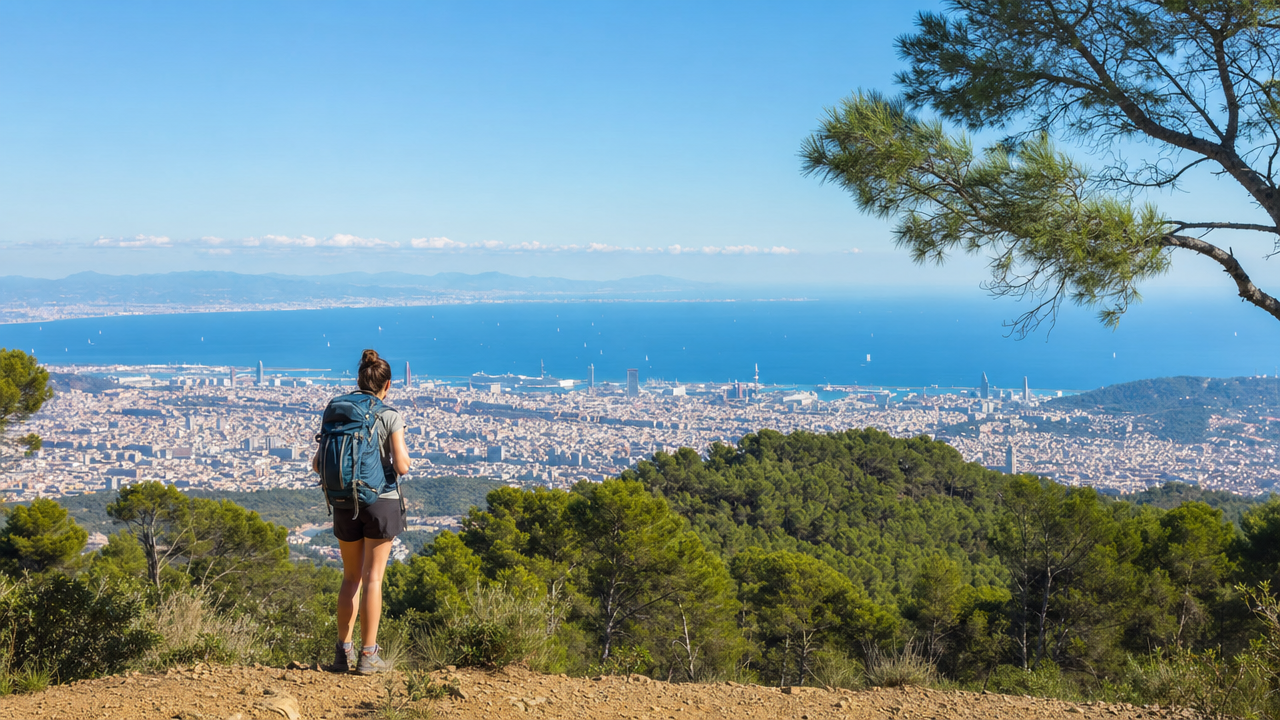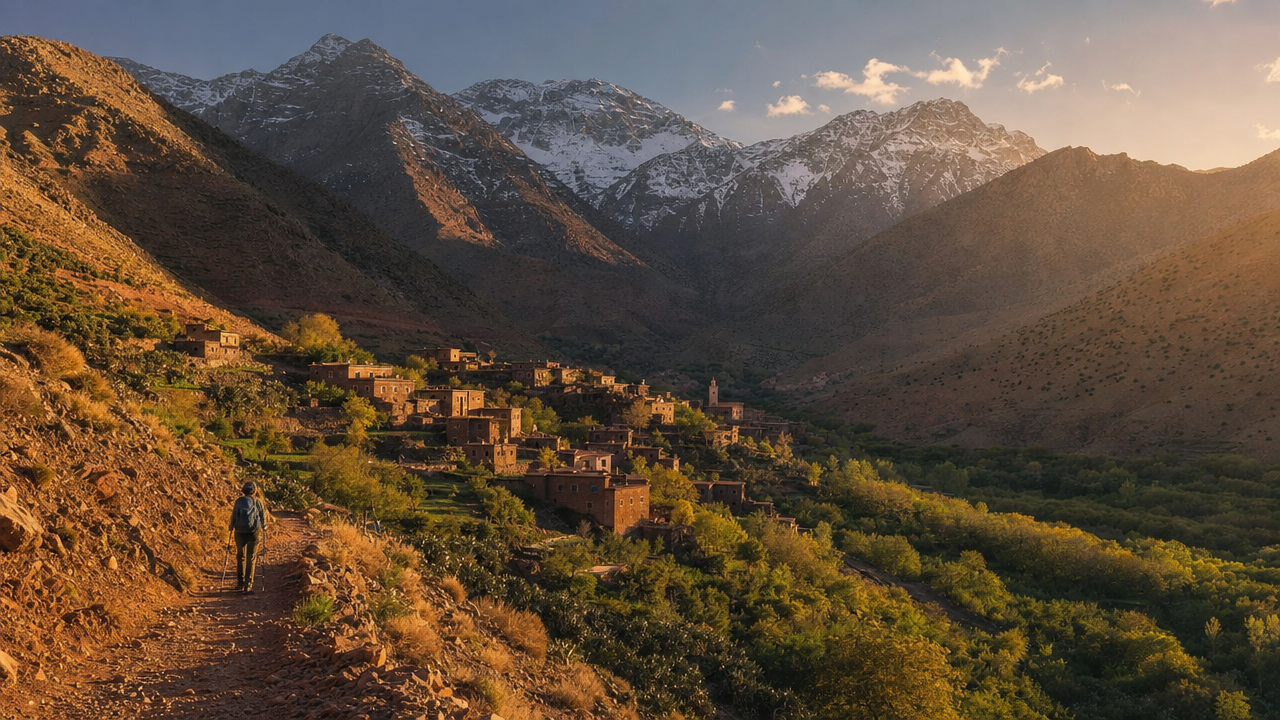
Most visitors to Lisbon never leave the city limits. They eat pastéis de nata in Belém, ride Tram 28 through Alfama, and spend a long afternoon with a glass of vinho verde at a miradouro overlooking the Tagus. All of that is worth doing — but it's only half the story. What makes Lisbon special as a travel base is what sits within an hour or two of its centre: a coastline that hosts a World Surf Reserve, a mountain range crowned with a fairytale palace, the westernmost point of continental Europe, and a network of hiking trails that run along cliffs dropping into the Atlantic.
This guide covers the best outdoor activities near Lisbon — surfing, hiking, viewpoints, and camping — with real distances, real logistics, and the kind of specifics you need to actually plan the trip.
Surfing Ericeira — 45 Minutes from Lisbon
Ericeira is not a hidden gem. It's one of the most famous surf towns in Europe, and for good reason. In 2011, it was designated the World Surfing Reserve — one of only a handful worldwide, alongside Malibu in California and Manly Beach in Australia. The title isn't ceremonial. It means Ericeira's wave quality, consistency, and environmental significance are protected at an international level.
The town sits 45 kilometres northwest of Lisbon — about a 45-minute drive up the A8 motorway, or an hour on the bus from Campo Grande station. You can day-trip it easily, but you'll want to stay longer.
The Main Breaks
Ribeira d'Ilhas is the most famous wave in Ericeira. It's a long, peeling right-hand point break that works on practically any swell direction and handles up to 3–4 metres. The beach is wide, the walk from the car park is short, and the atmosphere is buzzing — surf schools, rentals, and a café right on the sand. Ribeira d'Ilhas has hosted multiple World Surf League qualifying events, and when the swell hits, it draws a crowd. Go mid-week in autumn (September–November) for the best combination of consistent swell and empty lineups.
Coxos is the heavy one. A reef break that sits just south of town, Coxos barrels hard over a shallow rock shelf. It's strictly for experienced surfers — the take-off is fast, the wave is hollow, and the reef is unforgiving. On a good northwest swell, it's one of the best right-hand barrels in Europe. Watch from the cliff if you're not ready for it; the view alone is worth the walk.
Pedra Branca is a beach break that offers a more forgiving option when the points are closing out. It sits at the southern end of Ericeira's surf zone, with both left and right peaks that work across a range of tides. It's a good choice for intermediate surfers who want a session without the hassle of the Ribeira d'Ilhas crowd.
Logistics
You don't need a car to surf Ericeira. The Mapi and Isidoro buses run from Campo Grande station to Ericeira every hour, cost around €6 one-way, and drop you a 10-minute walk from the beach. Board rental in town runs €10–20 per day, and a full 4/3 wetsuit will set you back another €10–15. Surf schools charge €40–50 for a 2-hour lesson including all equipment — book through Ericeira Surf Camp or Surf Lisbon for reliable English-speaking instruction.
Best season for surfing: Autumn (September–November). The water is still warm from summer (around 18–20°C), the swells are consistent, and the offshore winds are most reliable. Winter (December–February) brings bigger waves and colder water (14–16°C — you'll want a 4/3 wetsuit and boots). Spring is quieter and less consistent.
Sintra-Cascais Natural Park — Forests, Palaces and Coastal Trails
Twenty-five kilometres west of Lisbon, the landscape changes completely. The flat coastal plain gives way to the granite hills of the Sintra Mountains, a UNESCO World Heritage landscape of dense Atlantic forest, Moorish ruins, and 19th-century Romantic palaces. This is the Sintra-Cascais Natural Park, and it offers some of the best hiking within reach of the city.
The Best Hikes
Pena Palace to Castelo dos Mouros Loop — This 5-kilometre trail starts at the Pena Palace (the candy-coloured fairytale castle that's the symbol of Sintra) and winds through the surrounding forest to the Moorish Castle, a 9th-century hilltop fortification with panoramic views that stretch to the Atlantic on clear days. The trail is well-marked and takes about 2 hours at a relaxed pace. Start early — by 10:00 the crowds at Pena Palace are thick enough to queue for an hour.
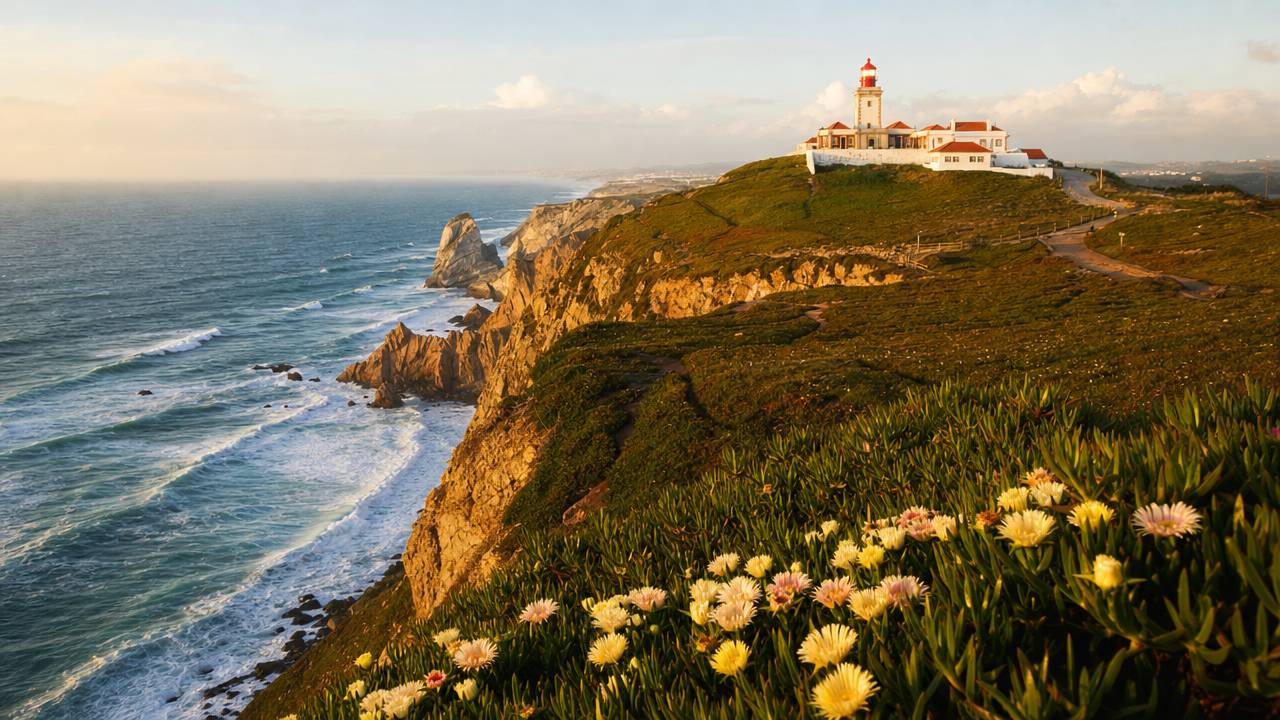
Cabo da Roca to Azenhas do Mar — This is the coastal crown jewel of the park. Cabo da Roca is the westernmost point of continental Europe — a windswept cliff face that drops 140 metres straight into the Atlantic. There's a lighthouse, a geographical marker with a quote from Luís de Camões ("Aqui, onde a terra se acaba e o mar começa" — "Here, where the land ends and the sea begins"), and a hiking trail that runs south along the cliffs.
The trail from Cabo da Roca to Azenhas do Mar is about 8 kilometres one-way along the cliff edge, with constant ocean views, wildflowers in spring, and benches placed at intervals for people who just want to sit and watch the waves. Azenhas do Mar itself is a tiny whitewashed village built into the cliff face, with a natural saltwater swimming pool carved into the rock and two restaurants serving fresh grilled fish (try Azenhas do Mar Restaurant for the seafood rice at €18).
Best season for hiking: Spring (March–May) and early autumn (September–October). Temperatures sit at 18–25°C, the wildflowers are out, and the trails are less crowded than in July and August. Summer (June–August) is hot and hazy — the coast is still pleasant (thanks to the Atlantic breeze), but the forest trails through Sintra can be humid and buggy.
Logistics
The 403 Scotturb bus runs from Sintra station to Cabo da Roca every 30–60 minutes (€3.50 one-way). From Lisbon, take the Sintra line train from Rossio station (40 minutes, €2.30). If you're driving — and for this trail, I recommend it — it's a 30-minute drive from central Lisbon to Cabo da Roca via the A5 and N247. Parking is free at the lighthouse.
Cabo da Roca — Standing at the Edge of Europe
Cabo da Roca deserves its own section because the experience is genuinely unusual. You can drive up, park, walk to the edge, take the photo, and leave in 20 minutes — but the travellers who get the most out of it arrive with time to spare.
The site sits at latitude 38°47'N, longitude 9°30'W — the westernmost point of the European landmass (Iceland and the Azores are further west, but this is the continental extreme). The wind is constant and strong. The cliffs are sheer. On a clear day, you can see the Berlenga Islands to the north. On a foggy day, you can't see 50 metres — and the atmosphere is even more dramatic.
Walk the short trail south from the lighthouse along the cliff edge. There's a small museum (free) that explains the history of the site, from Roman times through the Age of Discovery, and a café that charges tourist prices but has a terrace with the best view of any café in continental Europe.
Pro tip: Sunset is the time to be here, but the crowds are heavy year-round. Come for sunrise instead — you'll have the place to yourself, the light is golden, and the wind is usually calmer.
Azenhas do Mar — The Cliffside Village
Azenhas do Mar sits 6 kilometres south of Cabo da Roca, and it's the kind of place that makes you rethink your travel plans. The village clings to the cliff face in a way that seems structurally improbable — white houses stacked on ledges, narrow staircases connecting levels, and at the bottom, a natural swimming pool formed by rock that traps seawater at high tide.
The pool is free, accessible, and clean enough for a swim between May and October. The water temperature in summer sits around 18–22°C — bracing but refreshing. Above the pool, a restaurant terrace at O Pescador serves octopus salad and grilled sardines for under €15, with a view that competes with anything in the region.
From Azenhas, you can continue south along the coastal trail to Praia das Maçãs (2 kilometres, 30 minutes), a wide sandy beach with a surf break that works on southwest swells and a café that does an excellent €3.50 espresso and pastel de nata.
Passadiços do Paiva — The Boardwalk Trail (1.5 Hours from Lisbon)
The Passadiços do Paiva (Paiva Walkways) are a 8-kilometre boardwalk trail that runs along the Paiva River in the Arouca Geopark, about 1.5 hours east of Lisbon. It's one of the most popular hiking experiences in Portugal — the wooden walkways cling to the river gorge, passing through waterfalls, natural pools, and sections of dense riverside forest.
The trail has two sections: the Passadiços do Paiva (the main boardwalk, 8 km, about 2.5 hours one-way) and the Praia do Areinho access point at the southern end. You can walk the full trail in one direction and take a shuttle bus back (€3), or start from the northern access at Espiunca and walk south. Either direction works — the views are equally impressive.
Tickets are required (€12 for adults, book online at passadicosdopaiva.pt at least 48 hours in advance during summer and weekends). The walkways are open from 9:00 to 17:00 (closing at 18:00 in summer), and the temperature stays 5–10°C cooler in the gorge than on the coast — bring a light layer even on a hot day.
Best season: Late spring (May–June) when the river flows are high and the water level is perfect for swimming in the natural pools along the route. Summer (July–August) is busy — book tickets early and start before 10:00.
Costa da Caparica — Surfing and Camping 20 Minutes from Lisbon
Most tourists don't make it to the south bank of the Tagus, but the locals know the secret. Costa da Caparica is a 15-kilometre stretch of Atlantic-facing beach that starts 20 minutes south of central Lisbon, just across the 25 de Abril Bridge.
The surf here is more consistent than many people expect. The main break, Praia da Rainha, works on northwest to southwest swells and produces clean beach-break waves that suit beginners and intermediates. There are surf schools along the entire stretch, with board and wetsuit rental from €20 per day. The vibe is relaxed — this is where Lisboetas come to escape the city, not to show off.
Camping at Costa da Caparica is straightforward. Orbitur Costa da Caparica is a well-maintained campsite with pitches for tents (from €10 per night), a pool, a restaurant, and direct access to the beach. It's popular — book ahead in July and August. For a wilder experience, Praia do Castelejo, further south along the coast, permits free camping on the cliff tops (no facilities, no water, carry in and carry out).
Logistics
Take the Bus 101 from Lisbon's Sete Rios station to Costa da Caparica (30 minutes, €3.00). By car, it's 15 minutes from central Lisbon via the 25 de Abril Bridge — avoid the bridge between 8:30 and 10:00 on weekdays (traffic backs up from the toll booths).
Arrábida Natural Park — Mediterranean Beaches and Rocky Trails
Thirty-five minutes south of Lisbon, the Arrábida Natural Park is a limestone mountain range that drops directly into the sea. The south-facing beaches here are the closest thing to the Mediterranean within reach of Lisbon — turquoise water, white pebble coves, and steep forested hillsides that smell of pine and rosemary.
The signature hike here is the Arrábida Summit Trail — a 6-kilometre loop that climbs from the Convento da Arrábida (a 16th-century Franciscan monastery) to the top of the Serra da Arrábida at 501 metres. The view from the summit is wide and dramatic: the entire coastline from Setúbal to Cabo Espichel unfolds below you. The trail takes about 3 hours and is best in spring or autumn — summer sun at this elevation is intense, and there's little shade on the upper sections.
Portinho da Arrábida is the beach at the base of the park — a small, sheltered cove with electric blue water and pebbles instead of sand. It gets crowded but the water quality is excellent. Arrive before 9:00 in summer to get a spot.
Alentejo Coast — The Wild South (1.5 Hours from Lisbon)
South of the Arrábida Park, the coastline opens up into the Alentejo — a region of vast beaches, empty dunes, and small fishing villages that feels a generation behind the rest of Portugal. This is where you go to escape crowds entirely.
Comporta is the most famous Alentejo beach town, known for its long, empty beaches and chic-rustic estalagens. The surf here is mellow — beach breaks that work best on small to medium swells — and the camping options are excellent. Camping Comporta offers tent pitches from €8 per night under pine trees, with basic facilities and a 10-minute walk to the beach.
Further south, the Fishermen's Trail (Trilho dos Pescadores) runs along the entire Alentejo coast — part of the larger Rota Vicentina network. The sections nearest Lisbon run from Porto Covo south through Vila Nova de Milfontes and Almograve, following the cliff edge through wild, undeveloped coastline. You can day-hike individual stages of 10–15 kilometres, wild camp on the cliffs (permitted and common), and refuel at the fishing villages along the route. The complete trail runs 220 kilometres to Sagres, but the Alentejo sections are the most dramatic and least crowded.
Putting It All Together — Sample Itineraries
Surf Weekend (3 Days)
- Day 1: Arrive in Ericeira by 10:00, surf Ribeira d'Ilhas on the afternoon high tide. Stay at Ericeira Surf Camp (dorm from €25/night).
- Day 2: Morning session at Coxos (if you're experienced) or Pedra Branca (for intermediates). Lunch at Mar d'Areia for the grilled sea bass (€16). Afternoon explore the town and watch the sunset from Praia do Norte.
- Day 3: Dawn surf, breakfast at Café Silva, drive back to Lisbon via Sintra — stop at Cabo da Roca on the way.
Hiking and Viewpoints (3 Days)
- Day 1: Train from Rossio to Sintra at 8:00. Hike the Pena Palace — Castelo dos Mouros loop by 12:00. Bus to Cabo da Roca for the afternoon. Walk south to Azenhas do Mar. Sunset dinner at O Pescador. Return via bus to Sintra train station.
- Day 2: Drive or bus to Passadiços do Paiva (leave Lisbon by 8:00). Walk the full 8-kilometre boardwalk by 13:00. Shuttle back. Lunch in Arouca town. Return to Lisbon by evening.
- Day 3: Morning hike in Arrábida Natural Park. Afternoon at Portinho da Arrábida beach. Drive back via Costa da Caparica for a sunset surf session.
Camping and Coast (4 Days)
- Day 1: Set up camp at Orbitur Costa da Caparica. Afternoon surf at Praia da Rainha.
- Day 2: Drive to Comporta (1 hour south), camp at Camping Comporta. Evening walk on the beach and grilled fish dinner in the village.
- Day 3: Hike a 12-kilometre section of the Fishermen's Trail between Porto Covo and Vila Nova de Milfontes. Wild camp on the cliffs. Zero light pollution — bring a headlamp and watch the stars.
- Day 4: Morning swim, drive back to Lisbon via Setúbal for lunch at the mercado (the grilled cuttlefish at Bom Prato is €10 and excellent).
The Bottom Line
Lisbon is not just a city break. It's a base camp for a coastline that offers world-class surfing, genuinely dramatic hiking, viewpoints that stop you mid-sentence, and camping that ranges from organised comfort to wild cliff-top solitude. The best part is how accessible it all is — you can be in the water at Costa da Caparica 30 minutes after landing at the airport, or standing at the edge of Europe at Cabo da Roca within an hour. Autumn for surf, spring for hiking, and year-round for the views.