What to Pack for the High Atlas: A Practical Guide
Packing for a trek in Morocco's High Atlas Mountains is different from packing for a European mountain range. The altitude (up to 4,167m at the summit of Jbel Toubkal), the culture (you'll be staying in Berber villages and mountain refuges), and the climate (extreme daily temperature swings, powerful sun, and the possibility of snow even in summer) all demand specific gear choices.
This packing list is based on first-hand experience trekking the Toubkal Circuit, the Ammeln Valley, and the trails around Imlil. It covers four seasons and includes the one item that most first-time Atlas trekkers forget.
The One Thing Most Hikers Forget
Cash. There are no ATMs in the High Atlas mountains. The mountain refuges accept cash only. The guides and muleteers expect cash at the end of the trek. The village shops in Imlil, Ourika, and the Aït Bouguemez valley have no card machines. You need Moroccan dirhams in your pocket before you leave Marrakech.
The nearest reliable ATM to the mountains is in Marrakech's Gueliz district. Once you're past Asni, there's nothing. Budget for guide tips (100–200 MAD per day for a group), muleteers (50–100 MAD), refuge accommodation (200–300 MAD per night including dinner), and emergency cash.
The Complete Packing List
Footwear (The Most Important Decision)
| Item | Why | Recommendation |
|---|---|---|
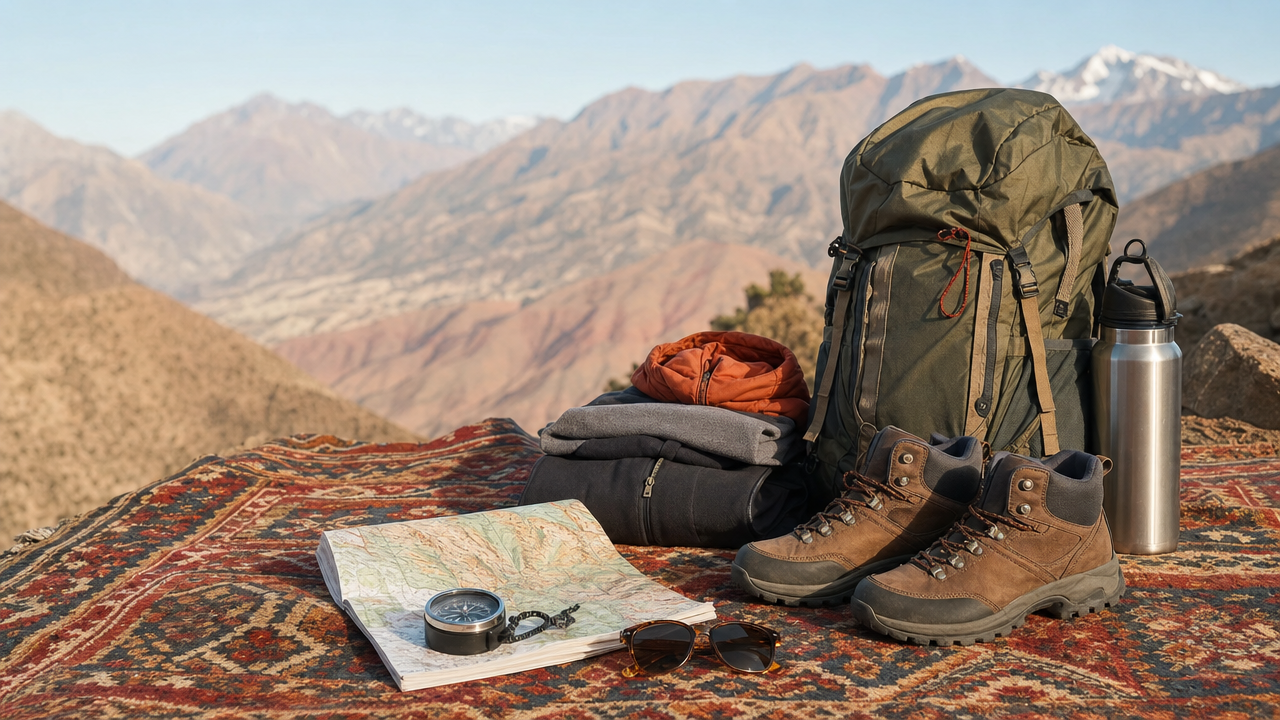
| Hiking boots | The trails are rocky, loose, and steep. Trainers are not enough. | Waterproof mid-cut boots with good ankle support (e.g. Meindl, Lowa, or Salomon). |
| Camp shoes | After 8 hours on the trail, your feet need to breathe. | Lightweight sandals or Crocs. |
| Gaiters | Essential in spring for mud and snow. | Any waterproof gaiter. |
Don't wear new boots on a High Atlas trek. Break them in for at least 50 km before you arrive. The best hiking boots for the Atlas Mountains are stiff-soled boots with good edge control for the scree slopes near the summit.
Layering System
The High Atlas can go from 30°C at midday in the valley to 0°C after sunset on the ridge. Layers are not optional.
| Layer | Item | Details |
|---|---|---|
| Base | Merino wool t-shirt (x2) | Quick-drying, odour-resistant. Avoid cotton. |
| Mid | Fleece jacket or light down vest | For the cold mornings and evenings. |
| Outer | Waterproof shell jacket | Essential for spring and autumn. Can be windproof only in summer. |
| Legs | Hiking trousers (convertible) | One pair with zip-off legs covers both warm and cold conditions. |
| Legs | Thermal leggings | For summit day and early morning starts. |
| Rain | Waterproof trousers | Lightweight packable. |
Head and Hands
| Item | Why |
|---|---|
| Sun hat | The sun at 3,000m+ is intense even in winter. A wide-brimmed hat is essential. |
| Warm beanie | Summit mornings are cold year-round. |
| Buff or neck gaiter | Dust, sun, cold — it does everything. |
| Sun gloves | The sunburn on the back of your hands after a week of trekking is real. |
| Warm gloves | Necessary for spring and autumn summit attempts. |
Backpack and Hydration
| Item | Details |
|---|---|
| Daypack (30-40L) | For carrying your own gear. The rest goes on a mule. |
| Water bottles (2L total) | Platypus-style soft bottles are lighter than hard bottles. |
| Water purification tablets | The refuge water is from mountain streams. It's usually safe, but tablets are cheap insurance. |
| Hydration bladder (optional) | Convenient for the trail, but harder to refill and clean. |
Sleeping
| Item | Details |
|---|---|
| Sleeping bag | Rated to -5°C for spring/autumn, 0°C for summer. The refuge blankets are not always clean. |
| Silk liner | Adds warmth, keeps the sleeping bag clean, and is useful on its own in summer. |
| Earplugs | Mountain refuges are not quiet. |
Navigation and Safety
| Item | Details |
|---|---|
| Headlamp | With fresh batteries. Essential for summit day starts at 4:00 AM. |
| Map | The IGN 1:100,000 map of the High Atlas. |
| GPS or phone | Download offline maps before you leave Marrakech. |
| Power bank | No electricity in most refuges. A 10,000 mAh bank will last a week. |
| First aid kit | Blister plasters, antiseptic, ibuprofen, rehydration salts, Imodium. |
| Sunscreen SPF 50+ | The sun at altitude is brutal. Reapply at lunch. |
| Lip balm with SPF | Chapped lips are a standard souvenir from the Atlas. |
What Should You Leave at Home?
| Item | Why Not |
|---|---|
| Camping stove | The refuges provide meals. You won't need to cook. |
| Tent | The High Atlas trekking route is based on refuges and gîtes. Wild camping is restricted. |
| Heavy camera gear | A phone camera is sufficient for most photos. The trails are demanding enough without a DSLR. |
| Cotton clothing | It stays wet, it's heavy, and it's cold when wet. |
What to Wear on the Plane
Wear your hiking boots on the flight to save weight in your luggage. The rest of your hiking clothes travel in your checked bag. This also means you have your boots if your luggage is delayed.
Packing by Season
Summer (June–August)
- Lighter sleeping bag (rated to 5°C)
- Shorter trekking trousers
- Extra sun protection
- Less cold-weather gear (but still bring a fleece and jacket for the summit)
Spring (March–May)
- Full layering system — expect snow on the summit well into May
- Waterproof jacket and trousers are essential
- Gaiters are highly recommended
- Warmer sleeping bag (rated to -5°C)
Autumn (September–November)
- Same as spring — the weather is similar
- Extra warm layers for late autumn
- A buff is essential for the dust on the approach trails
Winter (December–February)
- Expedition-level gear — this is serious mountaineering territory
- Crampons and ice axe are required for the Toubkal summit
- 4-season sleeping bag (rated to -15°C)
- Professional guide is mandatory
Is a Guide Required for the High Atlas?
Since 2018, a certified mountain guide has been mandatory for climbing Jbel Toubkal (4,167 m) and other High Atlas peaks after a series of accidents involving unguided trekkers on exposed terrain. Guide costs range from 400 to 600 MAD (€37 to €55) per day for groups of up to four and cover local expertise and navigation across poorly marked trails. Beyond guide fees, trekkers should budget 200 to 300 MAD per night for refuge accommodation including dinner, 100 to 200 MAD per day in guide tips, and 50 to 100 MAD daily for muleteers who carry the bulk gear between refuges. There are no ATMs in the High Atlas once you leave Marrakech's Gueliz district — all payments must be cash using Moroccan dirhams only. The nearest reliable ATM is in Marrakech itself; after Asni, card machines do not exist. For a standard week-long Toubkal Circuit trek, a realistic cash budget including guide fees, accommodation, tips, and emergencies is roughly 4,000 to 6,000 MAD per person.
The Atlas Mountains Trekking Guide has a full section on choosing a guide, including the difference between certified guides and unofficial "guides" who may approach you at the trailhead.
The Final Checklist
Before you leave Marrakech, run through this checklist:
- Moroccan dirhams (enough for the entire trek + tips)
- Passport (required for refuge registration)
- Guide booking confirmation
- Hiking boots (broken in, not new)
- Merino base layers (one worn, one in the mule bag)
- Fleece jacket
- Waterproof jacket and trousers
- Sun hat, warm beanie, buff
- Sunscreen SPF 50+
- Headlamp with spare batteries
- Sleeping bag (rated to the season)
- Water bottles (2L minimum)
- Power bank and charging cable
- First aid kit with blister care
- Map and compass (or GPS with offline maps)
- Earplugs and eye mask
If you have all of these, you're ready for the High Atlas. The mountains are waiting.
For a complete route guide, including itineraries for the Toubkal Circuit and the Ammeln Valley, read our Atlas Mountains Trekking Guide. For trail-specific information, check the hiking locations in Morocco for detailed route descriptions, difficulty ratings, and user reviews.