I'd been staring at the same YouTube clip of Anchor Point for about six months before I finally booked the flight. Every surfer I knew who'd been to Morocco came back with the same story — perfect waves, cheap food, and a town that runs on surf time. I needed to see it for myself.
So I booked three days in Taghazout. No surf camp package, no guide. Just me, a board bag, and a lot of hope that my pop-up wouldn't desert me in front of a crowd of locals.
Here's what actually happened.
How Do You Get to Taghazout?
Taghazout is a 45-minute taxi ride north of Agadir-Al Massira Airport. I landed at 11pm on a Tuesday, and the taxi stand outside arrivals quoted me 250 dirham (about €23). I'd read you can haggle down to 200, but honestly, after a 3-hour flight from London and a bag that weighed more than I do, I paid the 250 and called it a night.
The drive is unremarkable — dark highway, occasional police checkpoint where they wave you through, then suddenly you're climbing a coastal road and the ocean appears under a half-moon. The town itself is small. One main road, a few side streets, and everything is walking distance to the beach.
If you're flying into Marrakech instead, expect a 3-hour drive through the Atlas Mountains. Doable, but I'd fly into Agadir if Taghazout is your only destination.
Where Should You Stay in Taghazout?
I booked a room at a small guesthouse called Surf Station Taghazout through Booking.com — €35 a night for a private room with a shared bathroom. The place had a rooftop terrace with a view of the ocean, a communal kitchen, and a board rack in the hallway that was overflowing with epoxy and PU sticks.
The owner, a Moroccan-French guy named Samir, pointed me to the best bakeries and told me which beach to avoid on a big swell. That kind of intel is worth more than any shiny hotel lobby.
There are fancier options — the Hyatt Place is up the road, and there's a new wave of boutique riads charging €100+ a night. But if you're here to surf, you don't need a pool. You need a shower that works, a place to dry your wetsuit, and a bed that doesn't squeak. Surf Station delivered on all three.
Day 1: Anchor Point
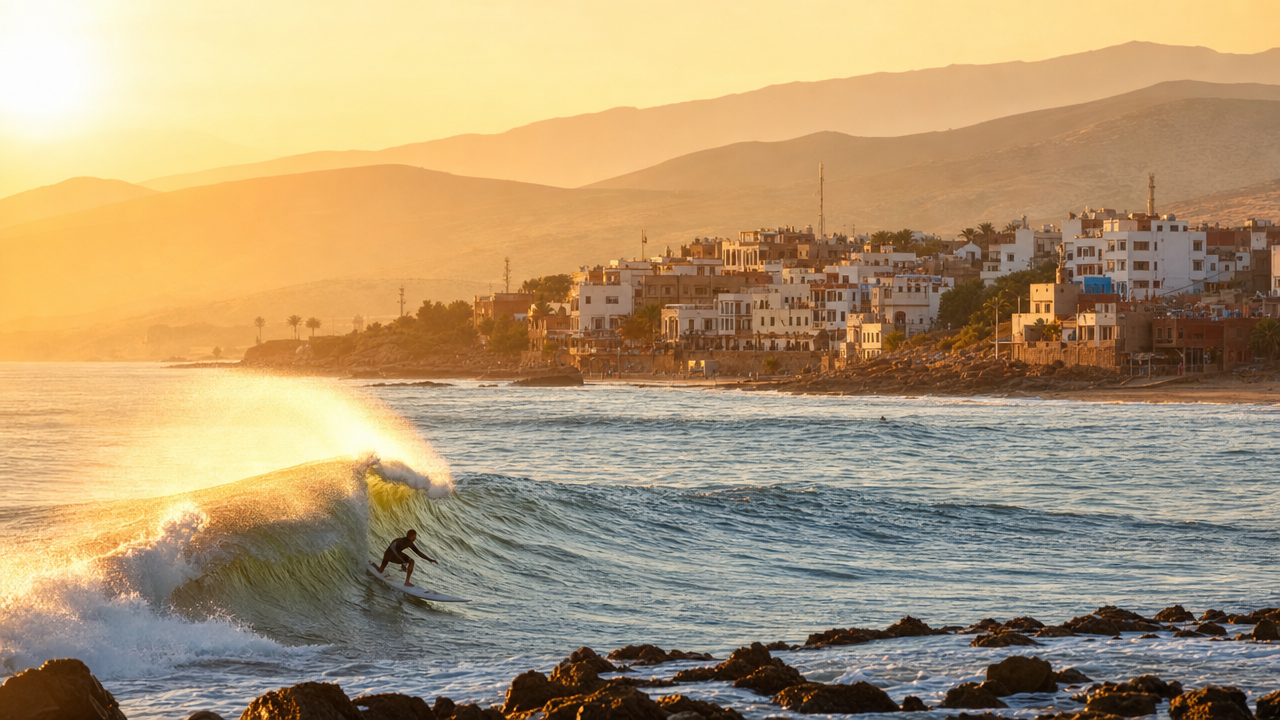
I woke up at 6:30am, pulled on my 3/2 wetsuit, and walked the five minutes to Anchor Point. The sun was just coming up over the hills, and the swell was running at about 1.5 metres — clean, glassy, with sets peeling right along the rocky point.
Anchor Point is famous for a reason. It's a long, consistent right-hand point break that can hold a 2-metre swell and still produce rideable waves. On a good day, you can take a wave from the peak all the way down the point for 200 metres. The wave is a slow, peeling right — perfect for beginners who can catch a green wave, and entertaining enough for intermediates to work on their cutbacks.
I paddled out at the main peak near the rocks. The vibe was better than I expected. About 15 surfers in the water, a mix of locals and tourists. The locals surf hard — they're aggressive on the takeoff and they know the lineup better than anyone — but they're not mean about it. Wait your turn, don't drop in, and you'll be fine.
My first wave was a 100-metre right-hander. I took off, did a pump, and just cruised down the line watching the cliff face slide past. The water was 19°C — warm enough that my 3/2 was borderline too hot by 9am. The wave sectioned perfectly, offering a second wall about halfway down that I managed to hit with a weak but satisfying bottom turn.
I surfed for three hours, took a break for breakfast, and went back out for another session in the afternoon when the onshore wind hadn't picked up yet. The afternoon crowd was thicker — maybe 25 people — but the wave is long enough that the lineup spreads out.
The reality check: Anchor Point doesn't work on every swell direction. It needs a solid NW swell. If the swell is small or the wind is wrong, you'll be staring at a flat ocean. Check the forecast before you book your trip around this wave alone.
Day 2: Hash Point
Hash Point was a 10-minute walk north of town. It's a beach break — sand bottom, peaks shifting every few minutes, and a much more forgiving wave than Anchor Point. I'd call it the perfect wave for beginners.
The setup is different. No defined peak, no rocks to dodge. You sit in the water, watch for the sets, and paddle for whatever looks promising. The wave itself is a short, punchy beach break — 50 to 80-metre rides max, but it's consistent and the crowd is spread out over a long stretch of sand.
I rented a 7'6" foamie from a shop on the main road for 150 dirham (€14) for the day. The shop also offered lessons for 250 dirham an hour, but I'd been surfing for about two years at that point and wanted to figure it out myself.
The water at Hash Point is shallower than Anchor Point, which means the waves break faster and steeper. If you're a complete beginner, this is where you want to book a surf camp in Taghazout — the instructors know the sandbars and can put you on the right waves without you wasting half the session paddling in the wrong spot.
After the session, I grabbed lunch at a beachfront cafe. A tagine with chicken and olives cost 60 dirham (€5.60). A fresh orange juice was 10 dirham (€0.93). I sat there in my boardshorts, still wet, watching the sunset turn the water orange, and thought: this is why people come here and never leave.
There's a reason so many people end up staying in Taghazout for weeks instead of days. The rhythm is seductive — surf, eat, sleep, repeat. I met a German guy who'd been there for three weeks and was on his second extension. He'd started as a beginner, couldn't stand up on day one, and by week three was catching unbroken waves at Hash Point. That's the kind of place this is.
Day 3: Panorama
Panorama is a reef break about a 15-minute walk south of town, past the fishing boats and the small harbour. The wave here is a left-hander — a nice change of direction after two days of rights. It's less crowded than Anchor Point, but the wave is more technical. The takeoff is steeper, the reef is shallow, and you need to commit.
I'd heard stories about Panorama. The wave itself is shorter than Anchor Point — maybe 80 metres on a good set — but it's faster, more hollow, and it throws a lip that you can actually hit. I'm not a good enough surfer to get barrelled, but I saw a few guys on shortboards get spat out of sections that looked genuinely dangerous.
I paddled out at mid-tide, which I'd been told is the safest time. Low tide exposes the reef and makes the wave dump onto rock. A local surfer named Youssef warned me in broken English: "Low tide, no go. The reef, it eats boards." He pointed at a ding repair on his own board. Message received.
The wave was inconsistent — maybe 4 waves in an hour — but when it came, it was a beauty. I caught one left that walled up perfectly, did two turns, and kicked out before the reef got too shallow. It was the best wave of the trip.
After the session, I walked back past the fishing harbour where the day's catch was being unloaded — sardines, sea bream, and a couple of small tuna. A fisherman offered me a freshly grilled sardine from a portable grill for 5 dirham. I ate it with my hands, standing on the harbour wall, watching the sun sink behind the surf.
What I Learned
Three days in Taghazout taught me more about surfing than six months of weekend sessions at home. Here's the short version:
The water is warmer than you think. I wore a 3/2 wetsuit in August and was too hot by 10am. A spring suit or even a rash guard with boardshorts would have been fine. If you're visiting in winter (December–February), the water drops to 16°C and you'll want a 4/3.
The locals are not hostile, but they expect respect. Don't snake waves. Don't drop in. Don't paddle out to Anchor Point without understanding the lineup. Morocco has a strong surf culture, and the local surfers have been in the water long before the tourism boom. Show respect, and they're the friendliest people you'll meet. Act like a kook, and you'll have a bad time.
You don't need a surf camp. If you're an intermediate surfer, you can do this trip independently. Rent a board by the day, find your own waves, eat at local restaurants. If you're a complete beginner, book a camp — the instruction, the equipment, and the transport take the guesswork out of the trip. There are plenty of surf camps in the Agadir region that run transfers from the airport and include meals.
The best time to surf is sunrise. The wind is offshore, the water is glassy, and the crowd is manageable. By 11am, the onshore wind picks up and the waves get choppy. The surfers who get the best waves are the ones awake at 6am.
Bring cash. A lot of places in Taghazout don't take cards. The ATM in town runs out of cash on weekends. I nearly got caught out on day two and had to borrow 200 dirham from Samir to cover breakfast. Withdraw at the airport in Agadir before you head north.
Practical Tips
A three-day surf trip to Taghazout, Morocco, is affordable by European standards, with most daily expenses falling under €50. The 45-minute taxi ride from Agadir-Al Massira Airport (AGA) costs between 200 and 250 dirham (€19–€23). Accommodation at a surf guesthouse like Surf Station Taghazout runs roughly €35 per night for a private room with shared bathroom, while boutique riads charge upwards of €100. Board rental from local shops costs 100–150 dirham per day (€9–€14), negotiable for multi-day hires, and wetsuit rental adds approximately 50 dirham per day. Meals are inexpensive: a chicken and olive tagine costs 50–80 dirham (€4.60–€7.50), fresh orange juice 10–15 dirham (€0.93–€1.40), and a full breakfast of eggs, bread, coffee, and juice runs about 40 dirham (€3.70). The critical detail is that many Taghazout establishments do not accept cards, and the town's single ATM frequently runs out of cash on weekends, so visitors should withdraw sufficient Moroccan dirham at the Agadir airport before heading north.
- Getting there: Fly into Agadir-Al Massira Airport (AGA). Direct flights from most European cities run year-round. A taxi to Taghazout is 200–250 dirham. Agree on the price before you get in.
- Best time to go: September to November is the sweet spot — consistent swell, warm water, no summer crowds. Winter (December–February) brings bigger swell but cooler water. Summer (June–August) is the busiest and most expensive time.
- Board rental: 100–150 dirham per day (€9–€14) for a foamie or a standard epoxy. Negotiate if you're renting for multiple days.
- Food: A tagine costs 50–80 dirham. Fresh juice is 10–15 dirham. A full breakfast at a cafe — eggs, bread, coffee, juice — is about 40 dirham. Eat at the local spots, not the tourist-facing restaurants on the main strip.
- Safety: Taghazout is a safe town. I walked around at night with no issues. Keep an eye on your board when you leave it on the beach — it's a rental, and replacing it costs more than you'd think.
- Wetsuit: Bring a 3/2 for summer, 4/3 for winter. If you forget, rental shops have them for 50 dirham a day.
Final Thoughts
Taghazout is not a luxury destination. It's a surf town. The streets are dusty, the infrastructure is patchy, and the power flickers during storms. But the waves are world-class, the food is good, and the whole place operates on a rhythm that's hard to find in Europe.
I flew home with salt-crusted hair, a sunburn on my nose, and a board bag that smelled like the ocean. Two weeks later, I booked another trip.
If you're thinking about surfing Morocco's Atlantic coast, stop thinking and go. Read the beginner's guide to surfing Morocco if you're new to the country, check the swell forecast, and book a room with a balcony that faces the water. You'll figure out the rest when you get there.
And if you see me at Anchor Point's consistent right-hand break, don't drop in on my wave. I'll be the guy still working on his bottom turn, smiling anyway.
Recommended Gear
We may earn a commission if you purchase through these links, at no extra cost to you. We only recommend products we genuinely use and trust.
O'Neill Hyperfreak 3/2
O'NeillLightweight 3/2mm wetsuit for autumn and spring surfing in Morocco and southern Portugal.
~$280-$350Torq Longboard 8'0"
TorqBeginner-friendly epoxy longboard. Stable, buoyant, and perfect for learning in Taghazout's gentle waves.
~$500-$700