Jemaa el-Fnaa
Marrakech, Marrakech-Safi
Jemaa el-Fnaa is the pulsating heart of Marrakech, one of the most famous public squares in Africa and a UNESCO Masterpiece of the Oral and Intangible Heritage of Humanity. For over a thousand years, this sprawling open space at the edge of the Marrakech medina has served as a meeting point, marketplace, and stage for the ever-changing spectacle of Moroccan street life. By day, the square is a relatively subdued expanse of orange juice stalls, henna artists, and snake charmers, but as the afternoon sun begins to soften, a remarkable transformation takes place. The square fills with a seemingly chaotic but beautifully orchestrated carnival of performers, food vendors, merchants, and spectators that continues late into the night — an experience that film-maker Orson Welles once called "the heart of the world."
The true magic of Jemaa el-Fnaa is best appreciated from above. The cafés and restaurants that line the square, particularly along the northern and western edges, offer rooftop terraces that provide an extraordinary aerial perspective. As the sun sets over the Koutoubia Mosque minaret, the square below becomes a sea of activity — smoke rises from dozens of grill stalls, drummers and Gnaoua musicians create a layered soundtrack of rhythm and melody, and the crowd swirls in patterns that feel both ancient and spontaneous. The best-known terraces include Café de France and Le Grand Balcon du Café Glacier, but nearly any rooftop along the square offers a front-row seat to this daily spectacle. The golden hour light, the distant Atlas Mountains on clear days, and the energy of the crowd below combine to create one of Morocco's most iconic viewpoints.
Descending into the square itself is an equally essential experience. As night falls, the food stalls take over, each with its numbered stall and signature specialities — grilled lamb skewers (brochettes), merguez sausages, snails in spicy broth, harira soup, fried fish, and the famous sheep's head (méchoui). Storytellers (hlequa) gather crowds with tales in Darija Arabic, acrobats perform, and traditional healers set up makeshift consultations. Navigating the square requires patience and good humour; vendors are persistent but not aggressive, and the atmosphere is one of shared festivity rather than commercial pressure. The best seasons to visit are spring and autumn, when the evenings are mild enough to linger on the terraces. Summer nights are also lively but can be oppressively hot, while winter evenings are cooler but far less crowded.
Highlights
- UNESCO-recognised cultural space and Marrakech's vibrant central square
- Bustling market with snake charmers, storytellers, musicians, and henna artists
- World-famous evening food market with dozens of sizzling street food stalls
- Best viewed from surrounding café terraces at sunset for a golden panorama
- Historic crossroads of trade and culture for over a thousand years
- Glimpse into authentic Moroccan street life, day and night
Features
More viewpoints in Morocco
Akchour Waterfalls
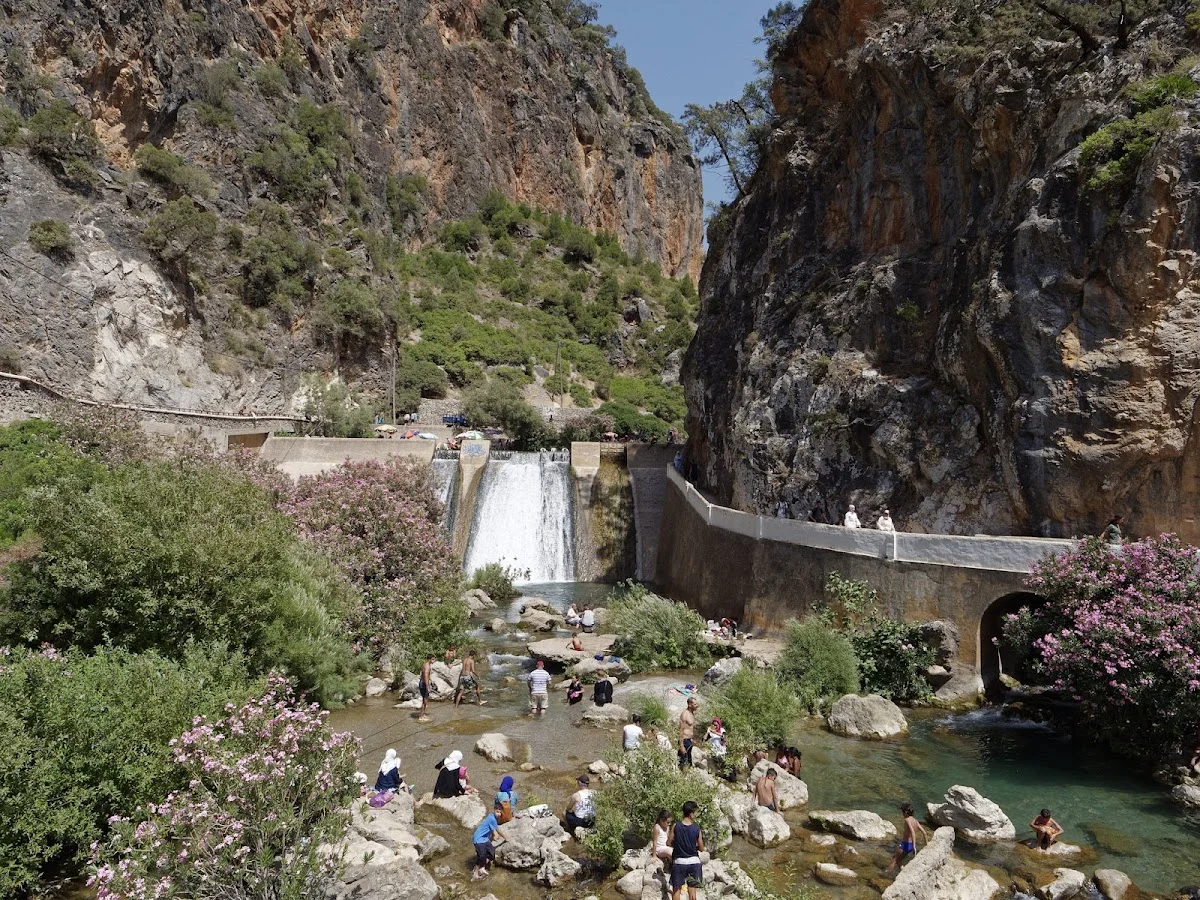
Akchour Waterfalls lie nestled in the rugged Rif Mountains, approximatel…
Chefchaouen Medina
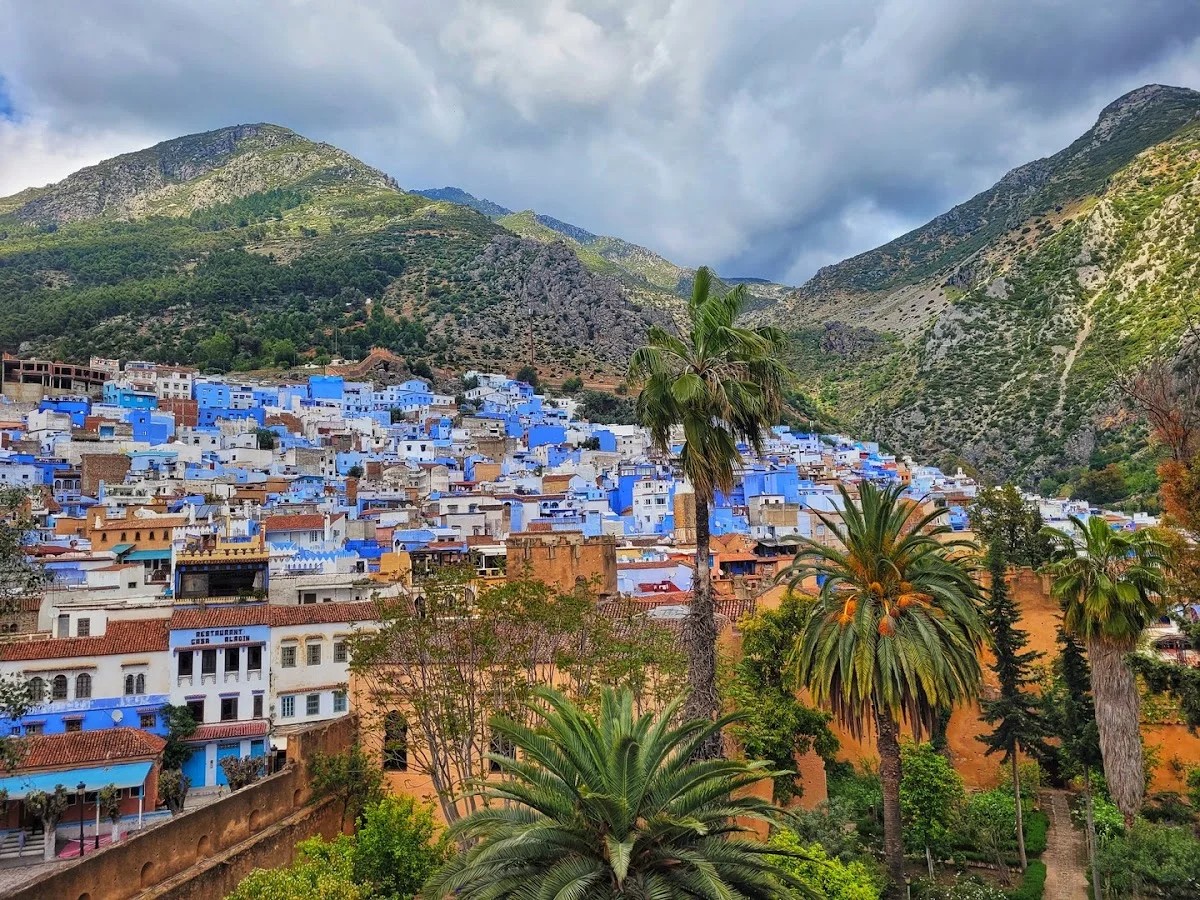
Chefchaouen Medina, the historic heart of the famous "Blue Pearl" of Mor…
God's Bridge Canyon
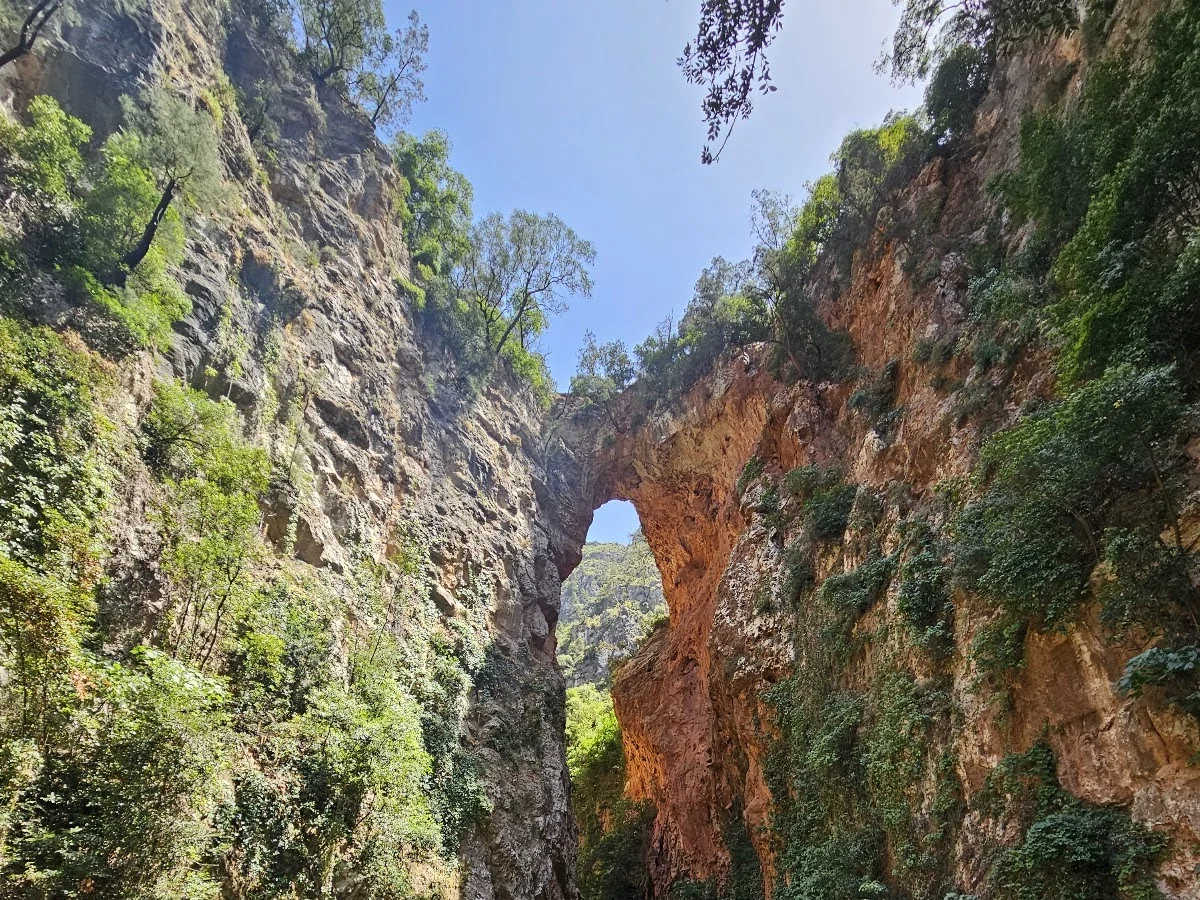
God's Bridge Canyon, known locally as "Pont de Dieu," is a breathtaking …