What Hidden Trails Await Beyond the Crowded Algarve Coast?
The Algarve is famous for its golden beaches, dramatic sea caves, and the well-trodden Seven Hanging Valleys trail near Benagil. But if you're willing to venture just a little further — past the souvenir stalls and the Instagram crowds — there's a network of coastal footpaths that most tourists never discover.
These trails offer something different: solitude, raw natural beauty, and the kind of silence that only comes when you're the only person on a cliff path with the Atlantic stretching to the horizon.
We spent two weeks walking the Algarve coast from Sagres to Tavira, documenting the trails that don't make the standard lists. Here's what we found.
1. Ponta da Piedade Boardwalk to Praia do Canavial
Distance: 5 km out and back Difficulty: Easy Best time: Late afternoon for golden light
Most visitors to Ponta da Piedade take the boardwalk, snap photos of the famous rock formations, and leave. But continue past the main viewpoint and follow the wooden walkway north. After about 1 km, the crowds thin out completely.
The trail hugs the cliff edge with uninterrupted views of the limestone sea stacks. In late afternoon, the light turns the golden rock to amber. Continue to Praia do Canavial — a small beach that is rarely busy even in peak season because most people don't know it exists.
Tip: Start 2 hours before sunset. You'll have the best light and the trail to yourself.
2. Sagres to Cabo de São Vicente Coastal Path
Distance: 11 km one way Difficulty: Moderate Best time: Early morning
This is the wildest section of the Algarve coast. The trail starts at Sagres fortress and follows the cliff edge west to the southwesternmost point of mainland Europe. Unlike the central Algarve, this stretch is protected as part of the Costa Vicentina Natural Park — no hotels, no boardwalks, just rough trail and wind-sculpted vegetation.
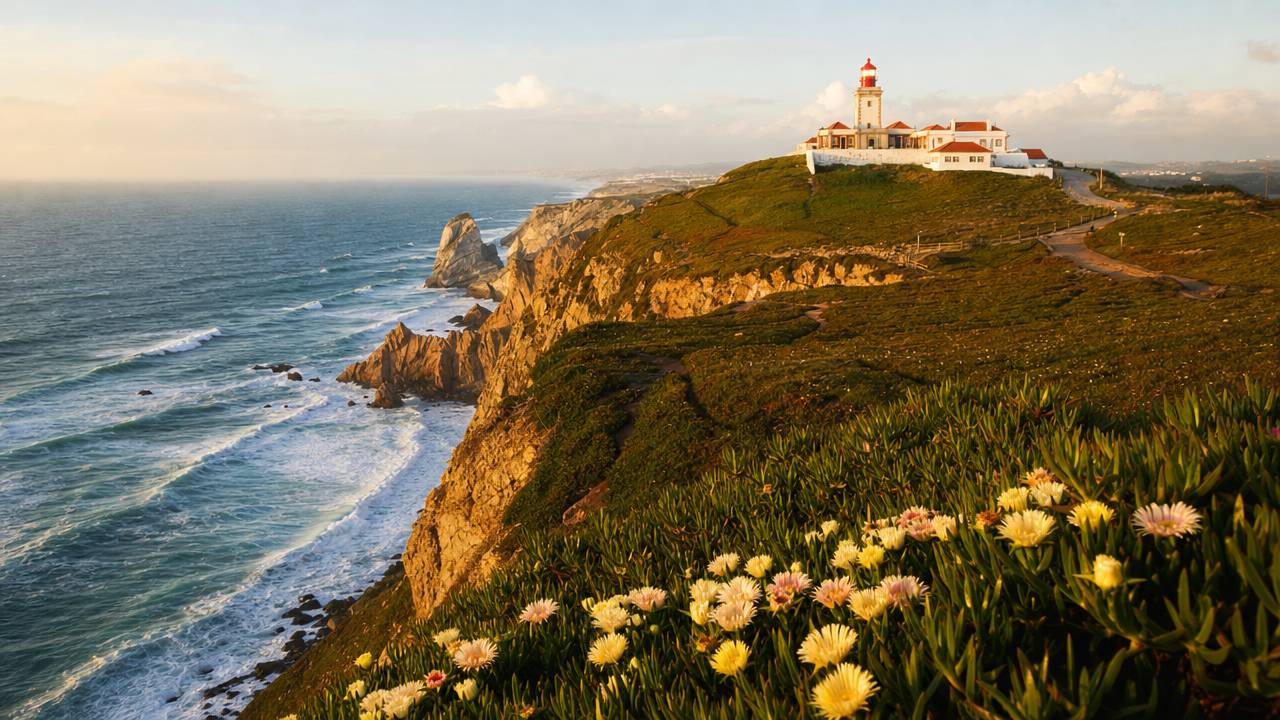
The landscape is stark and beautiful: flat-topped cliffs dropping 50 metres into turquoise water, with seabirds wheeling overhead. The lighthouse at Cabo de São Vicente is your destination, and on a clear day you can see the coast of North Africa.
Warning: The wind here is relentless. Bring a windbreaker even in summer. The trail has no shade.
3. Praia da Marinha to Praia de Benagil (Alternative)
Distance: 3.5 km one way Difficulty: Easy to moderate Best time: Mid-morning
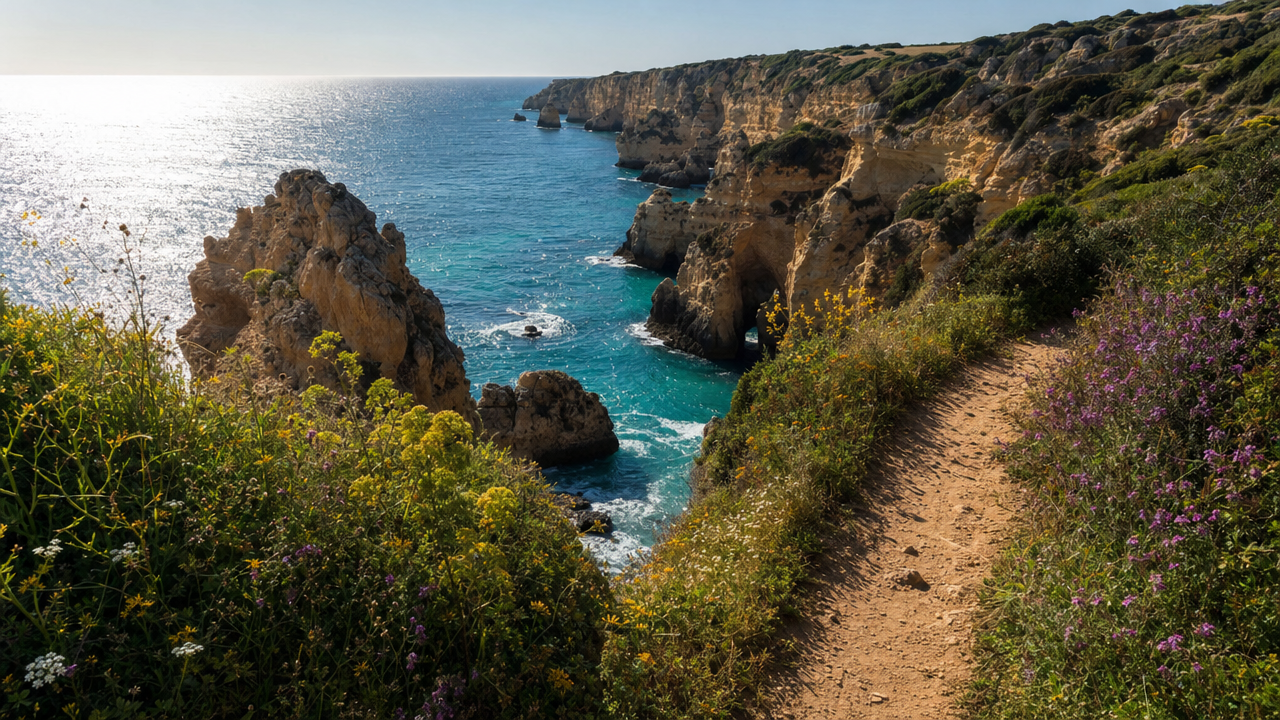
Everyone visits Benagil cave by boat or kayak. Few people know you can walk there from Praia da Marinha via a clifftop path that passes several smaller caves and sea arches along the way.
The trail starts at the western end of Praia da Marinha (one of the most photographed beaches in Europe, and for good reason). Follow the cliff path west. You'll pass three sea caves that are accessible only from the water but offer spectacular views from above. The trail ends at the clifftop above Benagil cave, where you can peer down through the famous hole in the roof.
Best photo: The view from the clifftop looking east at Praia da Marinha in the morning light is genuinely world-class.
4. Fóia to Monchique Mountain Trail
Distance: 8 km point to point Difficulty: Moderate to challenging Best time: Spring or autumn
Most Algarve hiking is coastal, but the interior has its own beauty. Fóia is the highest point in the Algarve (902 metres), and the trail down to the town of Monchique passes through cork oak forests, eucalyptus groves, and traditional farmsteads.
This is a completely different Algarve: cooler, greener, and much quieter. In spring, the wildflowers are extraordinary. The trail descends steadily, so you'll want to arrange transport from Monchique back to your start point.
Don't miss: The thermal springs at Caldas de Monchique at the end of the trail. Soak your tired feet in the 32°C mineral water.
5. Tavira Island Nature Trail
Distance: 6 km loop Difficulty: Easy Best time: Weekdays (avoid weekends)
Take the ferry from Tavira to Ilha de Tavira — a barrier island with 11 km of undeveloped beach backed by sand dunes and salt marshes. The nature trail starts at the ferry landing and loops through the Ria Formosa Natural Park.
This is a flat, easy walk through one of Portugal's most important wetlands. You'll see herons, flamingos, and ospreys if you time it right. The trail ends at the ocean side, where you can swim before catching the ferry back.
Best season: Autumn for bird migration. The salt pans turn pink in late summer.
When Is the Best Time to Hike the Algarve?
The best time for hiking the Algarve coast is from March through May and October through November, when temperatures range from 18 to 26 degrees Celsius and conditions are ideal for sustained coastal walking. Summer months from June through September present challenges, as temperatures regularly exceed 35 degrees Celsius on exposed cliffside trails with no shade, making midday hiking uncomfortable and potentially dangerous — hikers should carry at least 1.5 litres per person and start before 8 a.m. or after 5 p.m. in summer. Spring, from March to May, rewards hikers with wildflower displays across the region's limestone cliffs, alongside comfortable temperatures of 18 to 24 degrees Celsius. Autumn offers warm sea temperatures perfect for post-hike swimming, averaging 18 to 22 degrees Celsius, and delivers the clearest afternoon light for coastal photography. Winter hiking remains viable with daytime temperatures of 15 to 18 degrees Celsius, though shorter daylight hours of 9 to 10 hours limit route options and require an early start.
What to Pack
- Footwear: Trail runners or sturdy walking shoes for coastal paths; boots recommended for the Monchique trail
- Sun protection: Hat, sunscreen, sunglasses — the coastal sun reflects off the water
- Water: At least 1.5 litres per person on coastal trails (there are no water sources)
- Windbreaker: Essential for the western Algarve (Sagres area)
- Swimming gear: Many trails end at beaches worth a dip
Final Thoughts
The Algarve is far more than its famous sea caves and crowded beaches. The region's coastal trails offer a different way to experience this beautiful corner of Portugal — slower, quieter, and deeply rewarding. The trails we've listed here are just the beginning. Once you start exploring beyond the guidebook routes, you'll find there's always another path to discover.
Planning a trip? Check out our complete guide to hiking in Portugal for difficulty ratings, best times, and detailed route descriptions for every trail in our database.